
Last updated October 31, 2026
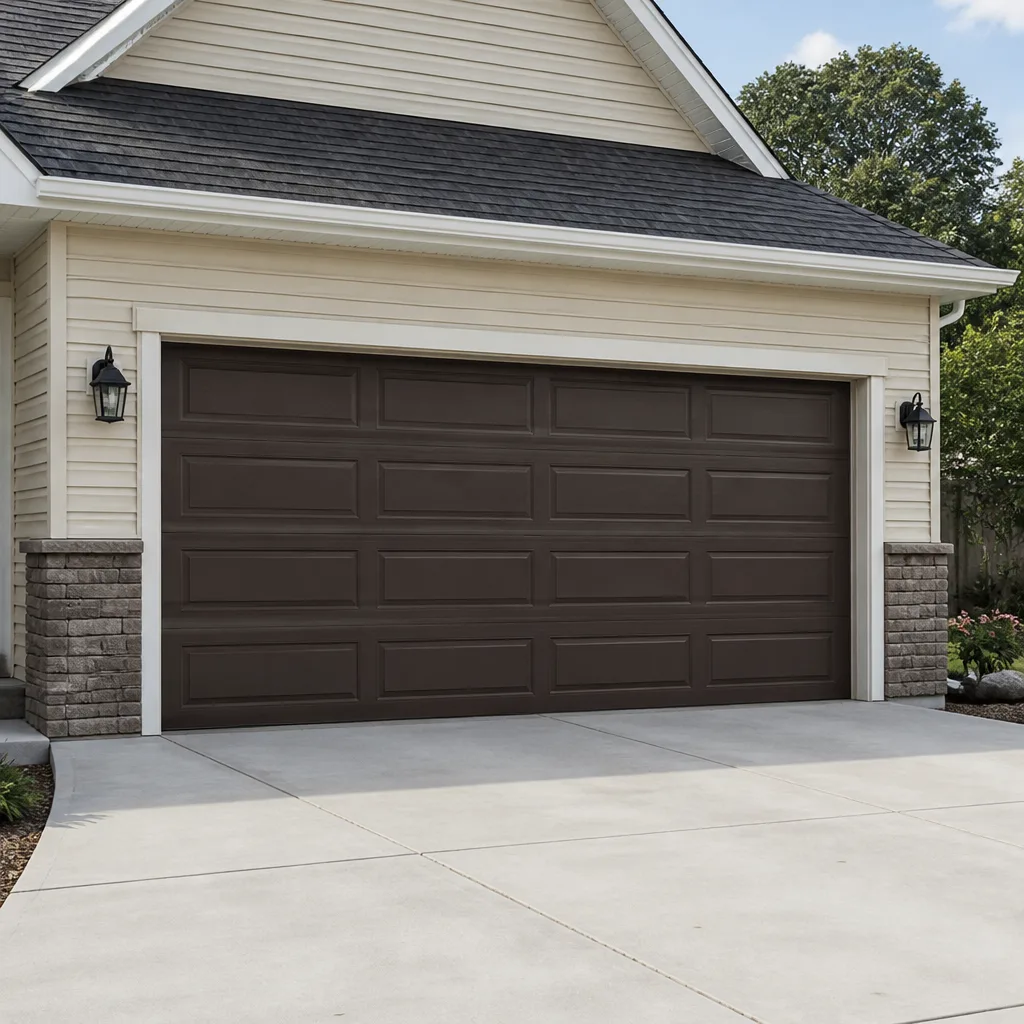 Raised-panel steel
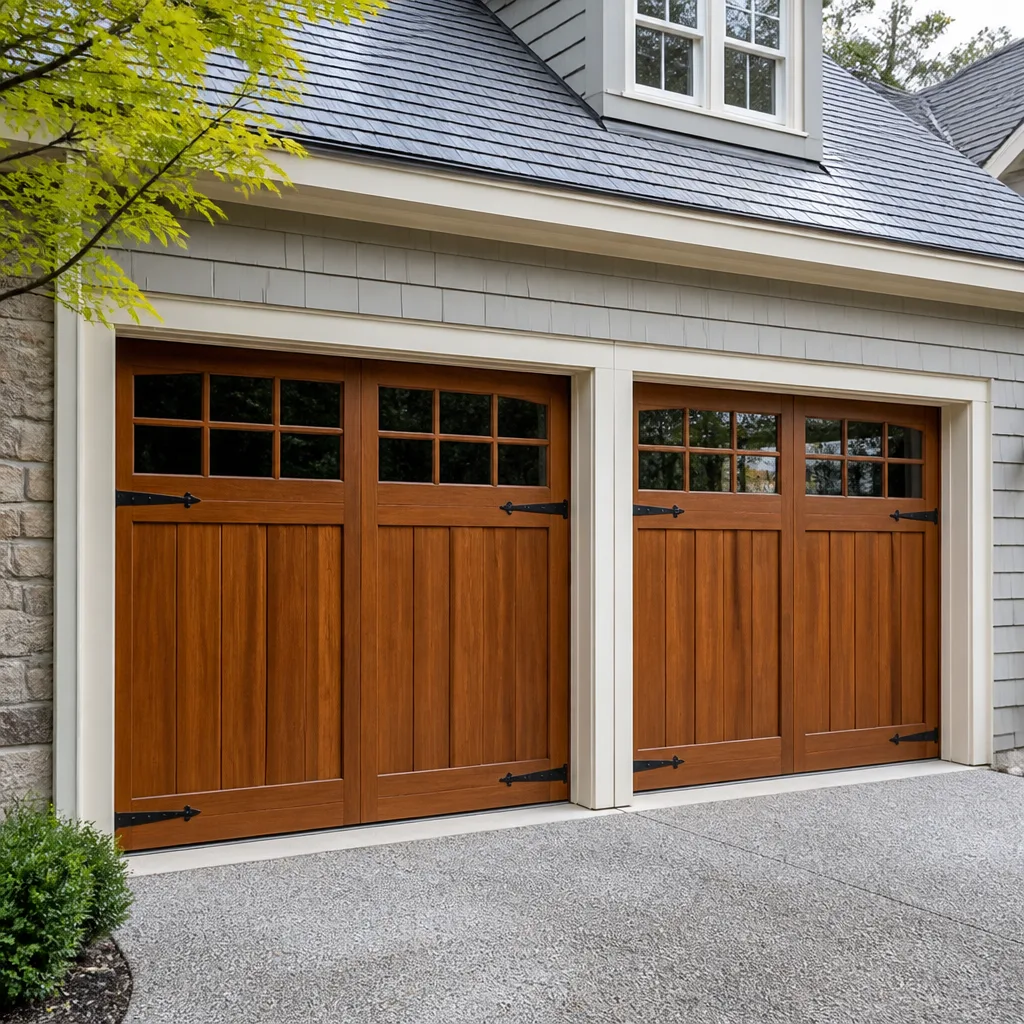 Carriage house
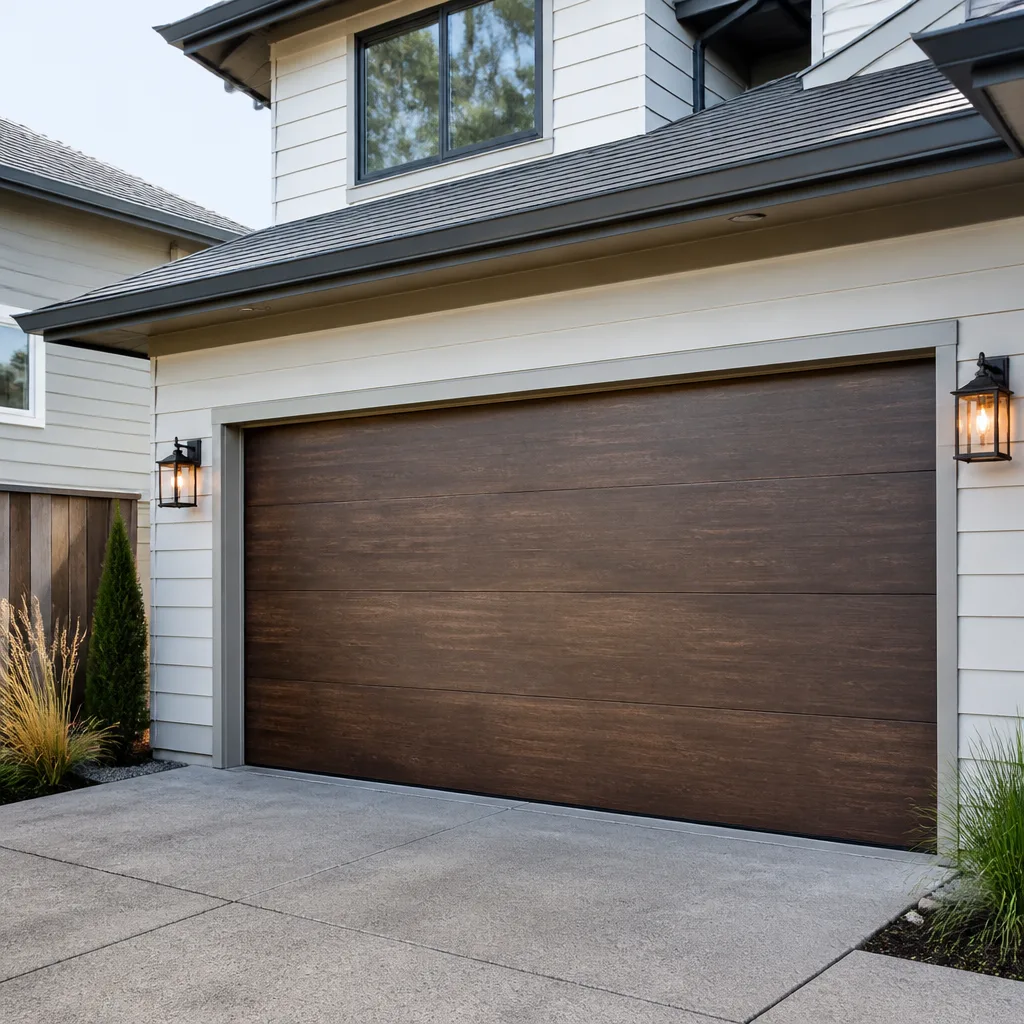 Modern flush
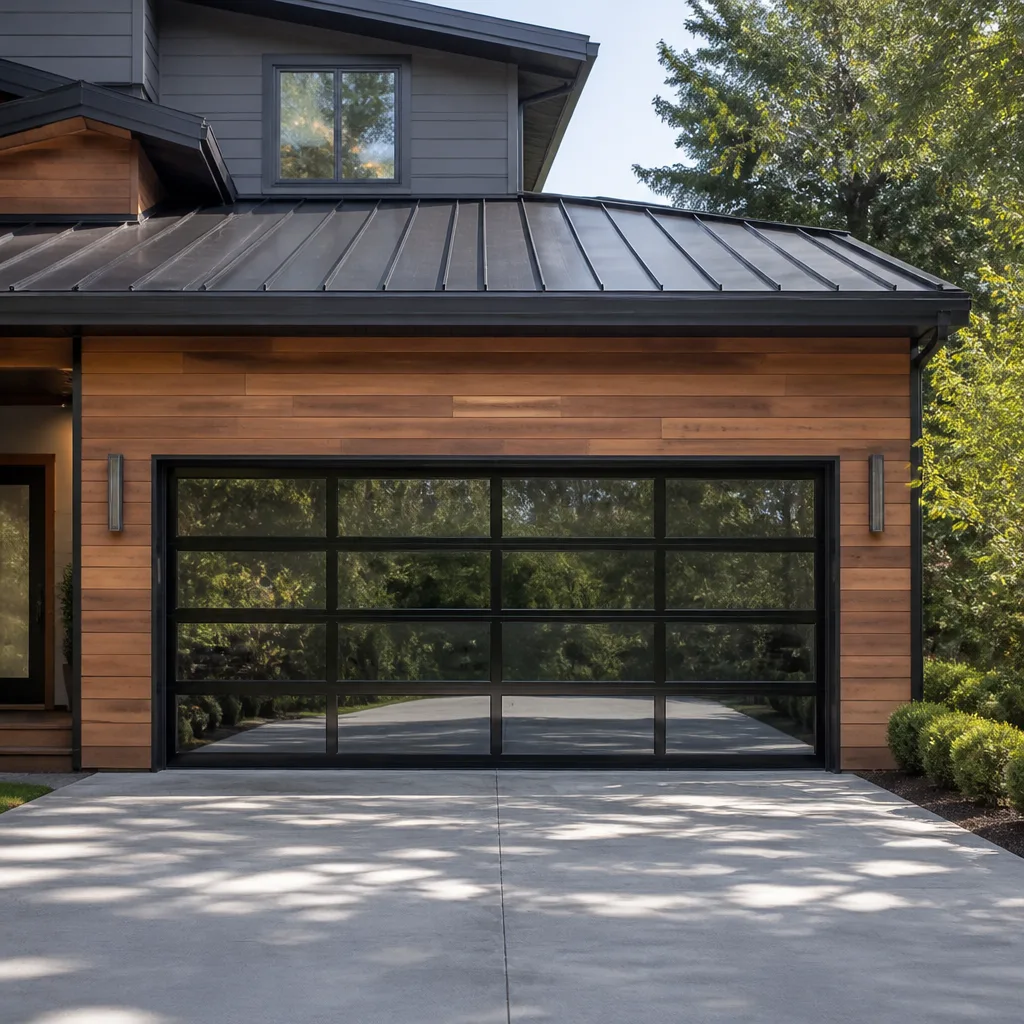 Full-view glass
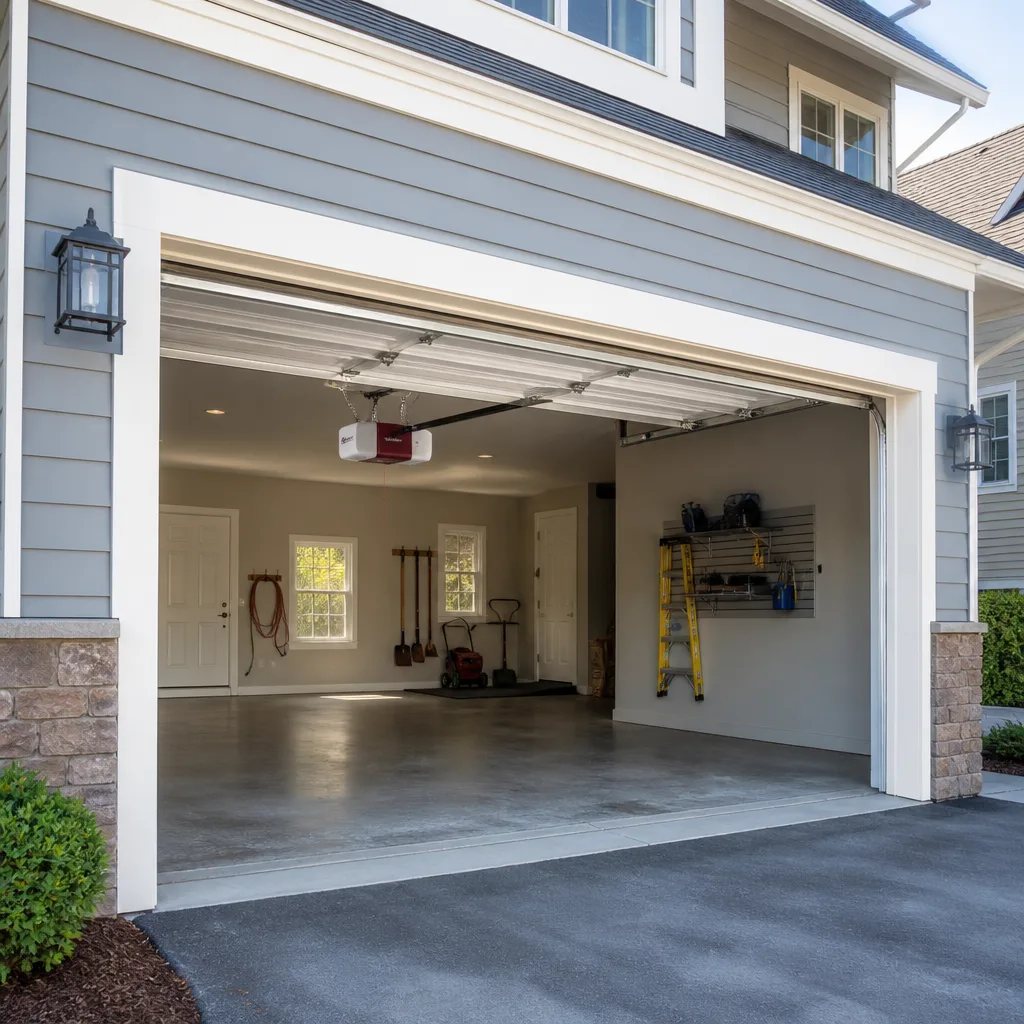 LiftMaster openers
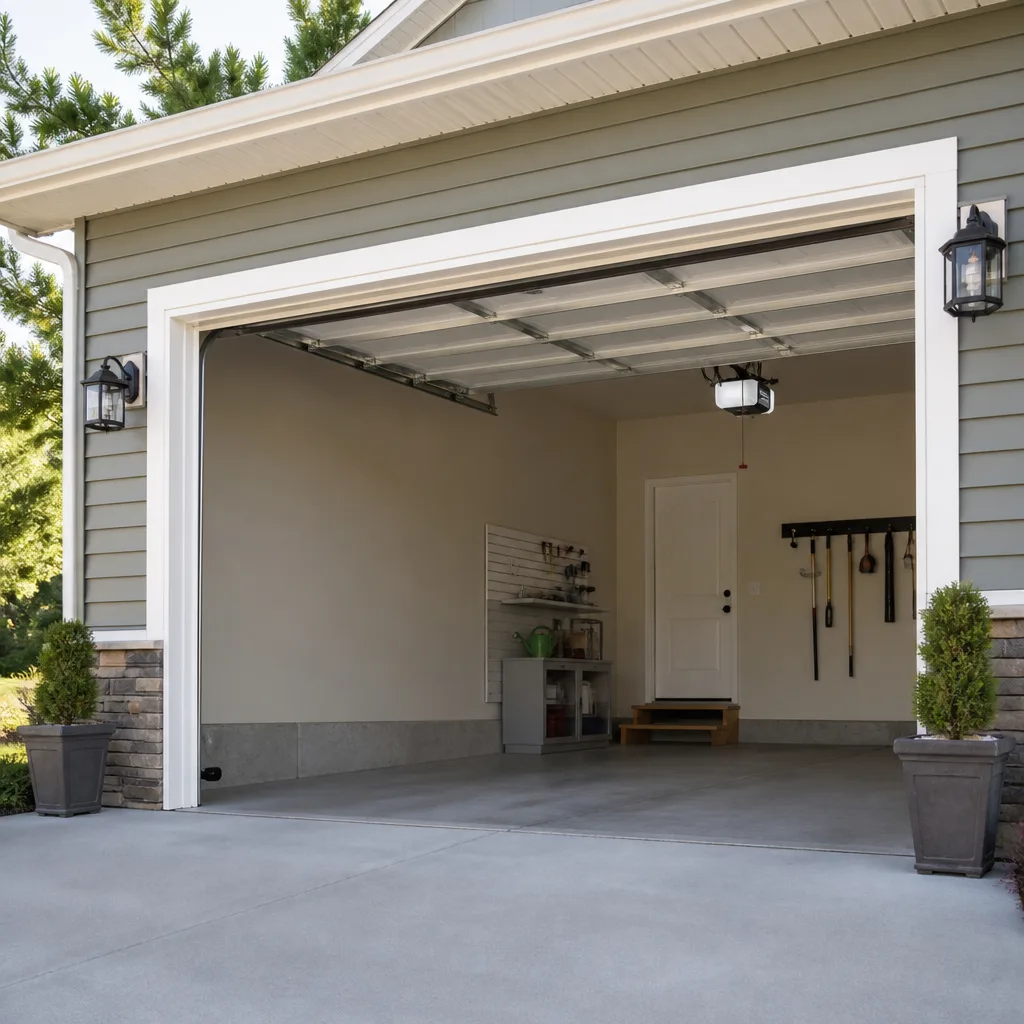 Chamberlain openers
Full 25-point door and opener safety check with every visit - springs, cables, rollers, tracks, and your LiftMaster or Chamberlain opener included
You get a price before we start. It does not change when the truck arrives.
Get your free estimateGarage Door Repair Maintenance Checklist for Miami Homeowners
The most common cause of garage door hardware failure in coastal Miami isn’t age or heavy use. It’s the wrong lubricant applied on the wrong schedule, trapping salt particles against bare metal until the hardware seizes or the springs snap. This checklist is built around the two seasons Miami actually has: hurricane season and dry season. If you follow the four-season advice from a national home-improvement site, you’ll over-lubricate in July and miss the salt-deposit buildup that quietly destroys your tracks, hinges, and torsion hardware by December. Here’s what to do instead.
Quick Answer
Miami homeowners should service their garage doors twice a year: once in early May before hurricane season and once in December after the salt-heavy wind season ends. The maintenance routine should focus on salt deposit removal, wind-load hardware inspection, and lubrication only with silicone or PTFE-based products that resist humidity without attracting airborne salt. Skip petroleum-based sprays entirely; they gum up in Miami’s wet heat. Most of the checklist takes about 45 minutes and requires no special tools beyond a ladder, rag, and the right lubricant.
Styles & brands we work with
Table of Contents
- Why Miami Needs Its Own Maintenance Schedule
- What You’ll Need Before You Start
- Pre-Hurricane Season Checklist (Late April to Early May)
- Post-Hurricane Season Checklist (December)
- Lubrication: What Works in Miami, What Makes It Worse
- Wind-Load Hardware: The Miami-Specific Inspection Most People Skip
- How to Spot Electrolytic Corrosion on Coastal Garage Doors
- What You Can DIY vs. What Voids Your Miami-Dade Product Approval
Why Miami Needs Its Own Maintenance Schedule
National garage door checklists assume winter freezes matter. They tell you to check weatherstripping for ice damage and lubricate before cold snaps. None of that applies here. What does apply: salt-laden air from the Atlantic, 70 to 80 percent average humidity, afternoon thunderstorms that dump an inch of rain in 20 minutes, and hurricane winds that test every fastener on the door. A garage door in Coral Gables or Coconut Grove faces a fundamentally different environment than one in Orlando or Jacksonville. The hardware corrodes faster, the lubricant breaks down differently, and the failure mode is more often a seized roller or a rusted hinge than a cold-weather contraction crack. We’ve pulled doors off tracks in Shenandoah where the roller stems had fused to the hinge barrels from salt and heat. That never shows up on a generic checklist.
The maintenance rhythm for Miami has two anchor points. The first is early May, right before the six-month hurricane window opens on June 1. This is when you confirm the door can handle wind pressure and that every fastener is tight. The second is December, after hurricane season closes on November 30. Salt deposits peak then because months of easterly winds off the Atlantic have been pushing salt spray inland. A December service removes the corrosive layer before dry season lets it bake onto the metal. Two services a year, placed at those two points, cover the actual seasonal stress Miami puts on a garage door.
What You’ll Need Before You Start
Most of this work requires a standard homeowner tool kit and about an hour per session. Here’s the full list:
- A sturdy 6-foot step ladder (never stand on the top rung)
- Clean cotton rags or microfiber cloths
- A bucket of warm water with a few drops of mild dish soap
- A stiff nylon brush (not steel wire; it scratches galvanized coatings)
- White lithium grease in a spray can or tube (for the opener rail only)
- A silicone spray or PTFE dry lubricant (for hinges, rollers, and the lock mechanism)
- A socket set with 7/16″, 1/2″, and 9/16″ sockets
- A flathead screwdriver
- Safety glasses
- Work gloves
One specific note for Miami homeowners: buy your lubricant new, not the can that’s been sitting on the garage shelf since 2019. Humidity degrades the propellant and breaks down the lubricant base. A fresh can applies evenly; an old one sputters and leaves thick patches that collect salt.
Pre-Hurricane Season Checklist (Late April to Early May)
The May service exists to make sure the door can survive a named storm without becoming a projectile or a pressure breach. Building science research from Hurricane Andrew and later storms shows that a garage door failing under wind load is one of the most common causes of total structural roof loss. When the door goes, the wind enters the garage, pressurizes the space, and lifts the roof from inside. This checklist is not optional if you live in a wind-borne debris region, which includes nearly all of Miami-Dade County.
- Wash the entire door surface, tracks, and hardware with soapy water. Remove salt film, mildew, and pollen. Rinse with clean water and let it dry completely. Salt left on metal accelerates pitting through the galvanized coating.
- Inspect every hinge, bracket, and bolt for rust or looseness. Use the socket set to snug any bolt that has backed off. Do not overtighten; hardware threaded into the door frame can strip. If a hinge shows red rust blooms, replace it before the storm season adds more stress.
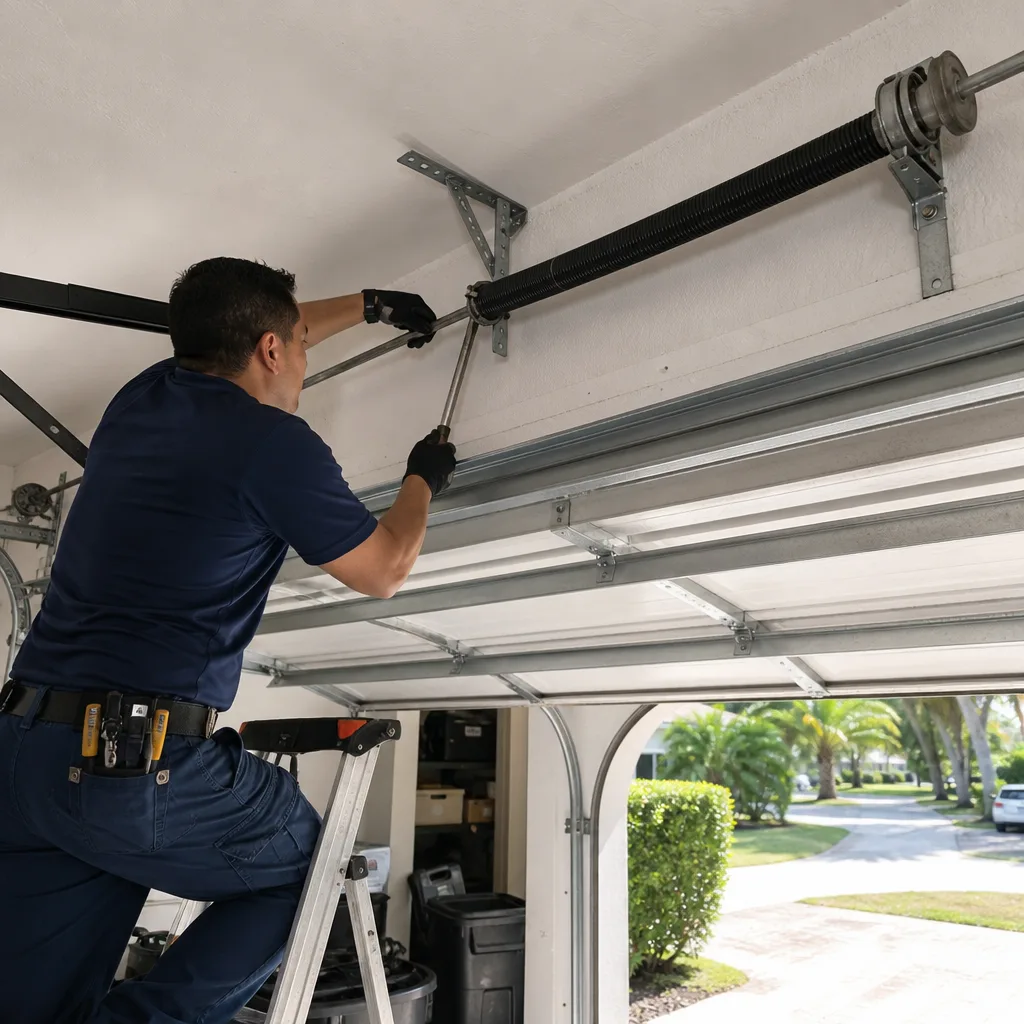
- Check the torsion spring balance. Pull the emergency release cord with the door closed, then lift the door manually. It should rise smoothly to about waist height and stay put without drifting. If it slams down or shoots up, the spring tension is wrong, and the door is not balanced. Call a professional for this one; springs are under lethal tension.
- Test the auto-reverse safety sensors. Place a roll of paper towels in the door’s path and close it. The door should reverse within two seconds of contact. If it doesn’t, the opener needs immediate service. A door that crushes instead of reverses is a safety hazard for every person and pet in the household.
- Examine the wind-load reinforcement struts. Miami-Dade code requires impact-rated or wind-load-rated doors. Look for horizontal metal struts across each panel. Tighten their mounting screws. If your door lacks visible reinforcement and you live in a pre-2002 home, have a technician confirm whether the door meets current wind-load requirements.
- Measure the weatherstripping and bottom seal. Light should not pass under the closed door. Miami’s heavy afternoon downpours will find any gap. Replace the bottom seal if it’s cracked, flattened, or shorter than the door width.
- Lubricate sparingly. Apply silicone spray to each hinge pivot and roller stem, then wipe off the excess. The goal is a thin film, not a wet coating. More on this in the lubrication section below.
This entire May routine runs about 45 to 60 minutes. Do it on a dry morning before the afternoon heat builds. The concrete floor will be cooler. If you find anything beyond loose bolts or dirty tracks during this pass, note it and schedule a Garage Door Repair in Miami visit before June 1. Waiting until a tropical storm is in the forecast means competing with every other homeowner in your neighborhood for the same technician window.
Post-Hurricane Season Checklist (December)
The December service is about recovery. The previous six months have exposed the door to salt spray, wind-driven rain, and the relentless UV that breaks down rubber and plastic. By December, that accumulated damage is measurable. Here’s the sequence:
- Deep-clean the tracks inside and out. Use the nylon brush and soapy water to scrub the interior of each vertical and horizontal track. Salt deposits hide in the track grooves where the rollers ride. If left in place, they grind the roller bearings down over dry season.
- Inspect every roller. Nylon rollers with sealed bearings are the standard in Miami because they resist salt corrosion better than steel. Spin each roller by hand. If any feels gritty, wobbles, or doesn’t spin freely, order replacements. Replacing a set of rollers before they fail costs far less than the spring and cable damage that happens when a seized roller drags the door off balance.
- Examine the cables for fraying or surface rust. The lifting cables under tension are not a DIY replacement item, but inspection is safe if you don’t touch them. Look for broken strands, brown discoloration, or flattening where the cable wraps the drum. Any of these means a professional should replace the cable pair, not just the damaged one.
- Wipe down all metal surfaces with a dry microfiber cloth. Remove the fine white salt dust that hovers near the coast in November. On aluminum doors, check for small white blisters around the panel edges; that’s the start of electrolytic pitting.
- Test the opener’s force settings. Run the door through a full open and close cycle. It should stop smoothly at both ends without slamming. If the door bounces at the floor or hesitates mid-travel, the force setting or travel limits may have drifted during the season.
- Re-check the door balance. Use the same manual lift test from the May checklist. Balance shifts as springs lose tension, and a full season of heat cycling accelerates that loss. Catching a weakening spring in December gives you the dry season to replace it on your schedule, not in a July emergency.
The December pass is also the right time to schedule any deferred maintenance you noticed in May but didn’t address. Contractors in Miami are less backlogged in early December than they will be the week before New Year’s or in the spring real estate rush.
Lubrication: What Works in Miami, What Makes It Worse
Most garage door lubrication failures are self-inflicted. The standard advice nationwide is to use a “garage door lubricant” or, worse, WD-40 on everything that moves. In Miami’s climate, that approach actively damages hardware. Here’s the reasoning: petroleum-based lubricants stay wet. In low humidity, that wet film keeps parts moving. In Miami, that same wet film becomes a magnet for airborne salt and dust. Within weeks it’s a gritty paste grinding against the metal. We’ve opened hinge barrels in Little Havana where the lubricant had turned into something closer to valve-grinding compound. The door didn’t need lubrication; it needed disassembly and cleaning.
The right products for Miami fall into two categories:
- Silicone spray for hinges, roller stems, springs, and the lock mechanism. It dries to a thin film that repels water and doesn’t hold salt. It’s safe on rubber and nylon.
- White lithium grease for the metal opener rail only. It’s thick enough to stay on the rail where the trolley rides, and the rail is generally sheltered from direct salt exposure inside the garage.
What to avoid entirely: WD-40 or any penetrating oil on hinges and springs, petroleum jelly, motor oil, cooking spray (yes, people use it), and any product labeled “multi-purpose” without a specific silicone or PTFE base. Also avoid grease on rollers. Nylon roller bearings are sealed or self-lubricating; adding heavy grease just collects debris.
Apply lubricant twice a year, at both the May and December service dates. That’s it. More frequent application in Miami means more wet film, more salt pickup, more wear. If a hinge still squeaks after proper lubrication, the noise is usually misaligned tracks or a failing roller bearing, not a lack of spray.
Wind-Load Hardware: The Miami-Specific Inspection Most People Skip
Since Hurricane Andrew flattened parts of South Miami-Dade in 1992, building code for garage doors has been rewritten around wind resistance. Modern Miami-Dade approved doors carry a product approval label, usually a sticker or engraved plate on the inside of a panel. That approval certifies the door can withstand specific positive and negative wind pressures, but only if the wind-load hardware is installed and maintained correctly.
That hardware includes more than the door panels. The critical pieces are the horizontal reinforcement struts bolted across each panel, the heavy-gauge track brackets anchoring the tracks to the framing, and the jamb brackets at each side of the door. If any of these are loose, the door’s wind rating drops from its tested capacity to something far lower.
Here’s what to check during both service passes:
- Every strut fastener is tight and rust-free; a sagging strut means the fasteners have pulled loose from the panel core
- Track brackets are secured to wood or masonry with no visible splitting or powdering around the anchors
- The door’s product approval label is still legible and matches the door you actually have (roofers and contractors sometimes swap doors without updating documentation)
- Side weatherstripping seals against the jambs; daylight showing through the sides means the door could flex under negative pressure
If your home predates the current code and you’re not sure whether the door is wind-load rated, a technician can identify the panel construction and hardware. For doors we service across Miami, we check the approval label and hardware condition as part of our Garage Door Repair services. It’s not a sales conversation; it’s a safety data point.
How to Spot Electrolytic Corrosion on Coastal Garage Doors
Electrolytic corrosion, also called galvanic corrosion, happens when two dissimilar metals touch in the presence of an electrolyte. Miami’s salt-laden humidity is the electrolyte. The most common location for this on a garage door is where steel fasteners or steel track brackets attach to aluminum door panels or aluminum frame components. The less noble metal corrodes faster than it would alone, and the damage appears in specific patterns.
Visual signs to look for:
- White powdery residue around screw heads where steel meets aluminum. This is aluminum oxide, and it means the fastener is eating the surrounding panel.
- Flaking or pitting on galvanized steel tracks within six inches of an aluminum bracket. The galvanized coating sacrifices itself first, leaving bare steel that rusts quickly.
- Dark staining that won’t wash off around hinge mounting points. This is usually the start of crevice corrosion in the fastener hole.
- Rust-colored streaks below steel hinges on aluminum doors. The hinge is fine; the aluminum around it is deteriorating.
Prevention is mostly about separation. On Amarr and Wayne Dalton aluminum door models we maintain, the factory uses plastic or rubber isolation washers between steel fasteners and the aluminum skin where contact would otherwise occur. If your door lacks those isolators on an exterior hinge, adding them costs pennies and prevents thousands in panel damage. Catching electrolytic corrosion in December gives you the dry months to clean the affected areas, treat the aluminum, and reinstall hardware with proper isolation before the next salt season starts.
What You Can DIY vs. What Voids Your Miami-Dade Product Approval
The honest dividing line for Miami homeowners comes down to one question: does the change affect the door’s wind-load certification or create a spring-tension hazard? If either answer is yes, it’s a professional job.
Safe to do yourself:
- Washing and salt removal from panels, tracks, and visible hardware
- Tightening loose hinge and track bolts with a hand socket (not an impact driver)
- Replacing a worn bottom seal or side weatherstripping
- Lubricating hinges, rollers, springs, and the opener rail with the right products
- Testing the auto-reverse sensors
- Cleaning photo-eye lenses
- Reprogramming remote controls
Not a DIY job, and potentially a product-approval issue:
- Replacing or adjusting torsion springs. These springs are wound under hundreds of pounds of torque. A sudden release can fracture bone or worse. Call a professional every time.
- Replacing lift cables. The cable works with the spring under tension. A wrong-length or wrong-installation cable can release the spring violently.
- Replacing panels. A mismatched panel from a different manufacturer or build year can change the door’s structural capacity. In Miami-Dade, a door with a modified panel assembly may no longer meet its wind-load approval, which can surface as a problem during an insurance inspection or a sale.
- Drilling new mounting holes for a different opener or bracket system. Those modifications are not covered under the original product approval.
- Converting a non-wind-rated door to a wind-rated door by adding struts. The approval is tied to a tested assembly, not individual parts bolted on later.
This distinction matters for insurance. After a hurricane claim, adjusters look for signs of modified or improperly maintained garage door systems. A door that fails because someone adjusted its own torsion spring assembly is a different claim than one that fails during a named storm despite proper maintenance. When in doubt, Garage Door Installation in Miami professionals can confirm whether a door still meets the approval it was sold with.
How to Do a Monthly Visual Safety Check (10 Minutes)
Between the two seasonal services, Miami homeowners should run a quick monthly visual pass. This isn’t maintenance; it’s early detection. A monthly check catches a failing roller or a fraying cable before it becomes an emergency at 7:45 a.m. on a school morning. Here’s the 10-minute routine:
- Stand inside the closed garage and look for daylight. Light passing under or around the door means weatherstripping gaps or door misalignment. Rain and salt mist will follow the same path.
- Run the door up and down once while standing to the side. Watch for hesitation, jerking, or unusual grinding. Any sound change from last month means something is wearing.
- Look at both lift cables. You’re checking for visible fraying or rust, not touching anything. Cables under tension stay where they are.
- Glance at each roller as it passes through the curve of the track. A wobbling roller is nearing failure. A roller that’s no longer round will grind the track into a groove.
- Step outside and inspect the bottom seal. Cracks or flattening in one spot mean water and debris are entering under the door.
- Test the reversing mechanism. A rolled towel on the floor is a good stand-in for a pet or child’s foot. The door should reverse before closing fully on it.
Ten minutes, once a month, is the cheapest insurance you’ll ever buy for a garage door in Miami. If any of these checks reveals a problem, address it that week, not next season. Small issues compound fast in a salt-and-humidity environment.
Common Mistakes to Avoid
- Using WD-40 or penetrating oil on hinges and springs. It’s a solvent masquerading as a lubricant. In Miami, it strips whatever protective film existed and leaves bare metal exposed to salt air. Use silicone or PTFE spray instead.
- Over-lubricating. More lubricant is not more protection. Wet, thick lubricant attracts salt and dust in coastal air, creating an abrasive sludge. A thin film, wiped dry, is correct.
- Ignoring the rollers until they fail. Roller bearings are the first component to die in a Miami garage door. They can be replaced cheaply and quickly. Ignoring a gritty roller for months turns a $60 fix into a spring, cable, and track repair that runs into the hundreds.
- Skipping the May pre-hurricane check because the door “seems fine.” Hurricane season turns small problems into structural ones. A loose track bracket in May is a two-minute fix. In September, that same bracket can let the door flex enough to jump the track during a storm.
- Tightening everything as hard as possible. Overtorquing strips the threads in the panel core or the framing. Snug, not forced. If a bolt won’t stay snug, the problem is the anchor point, not the torque.
- Replacing a spring yourself because a YouTube video made it look easy. Torsion springs store enough energy to kill or maim. The video doesn’t show what happens when the winding bar slips. This is the one repair where the cost of a professional is always less than the cost of the alternative.
- Using a pressure washer on the door panels. High-pressure water forces salt and grit into the panel joints, hinge barrels, and spring coils, and it strips protective finishes. A garden hose and a soft brush do the job without embedding corrosive grit.
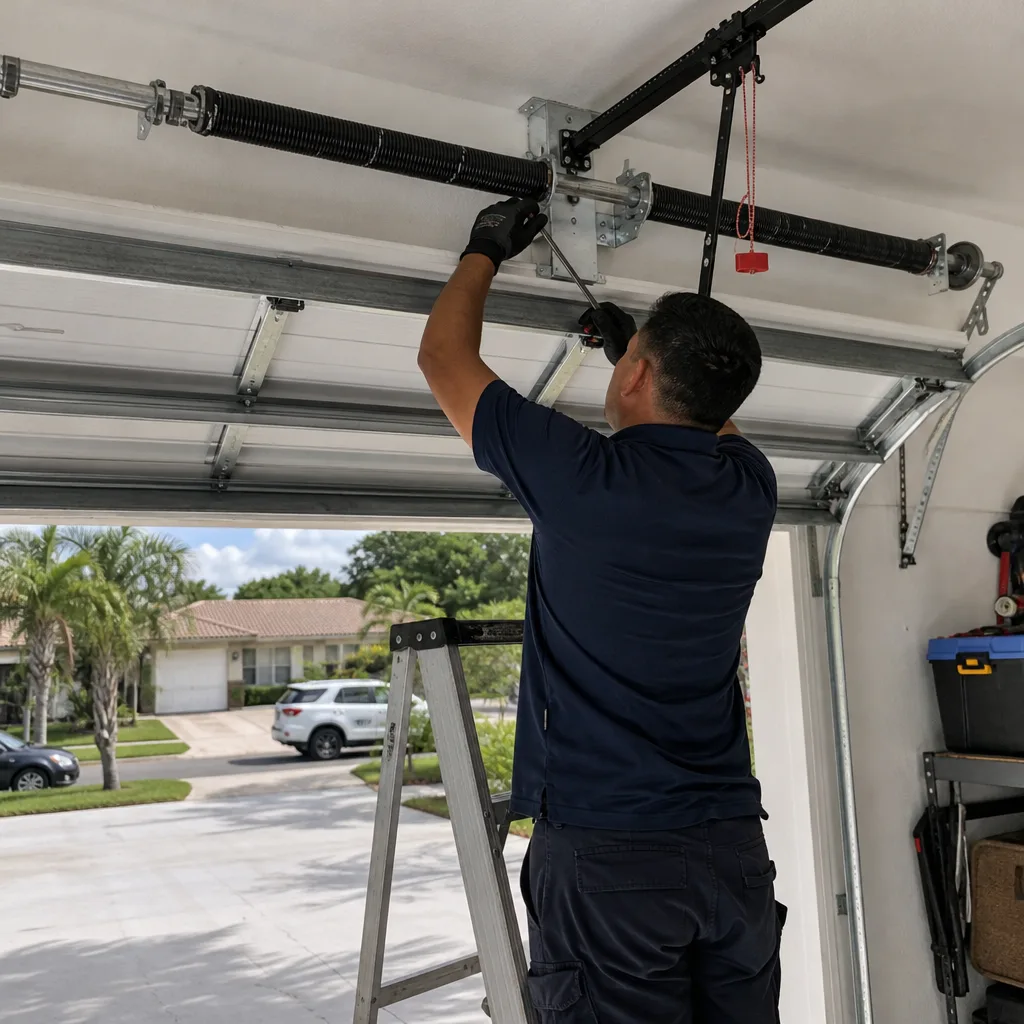
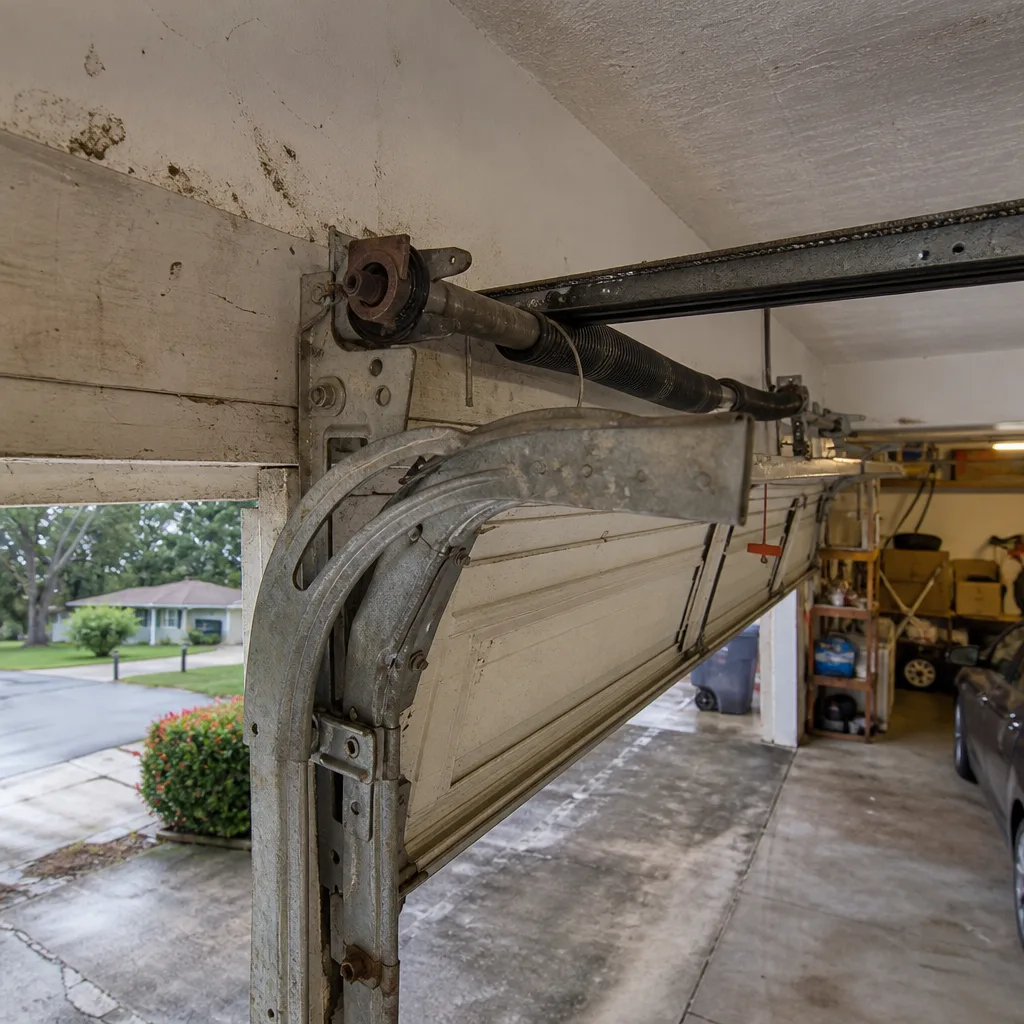
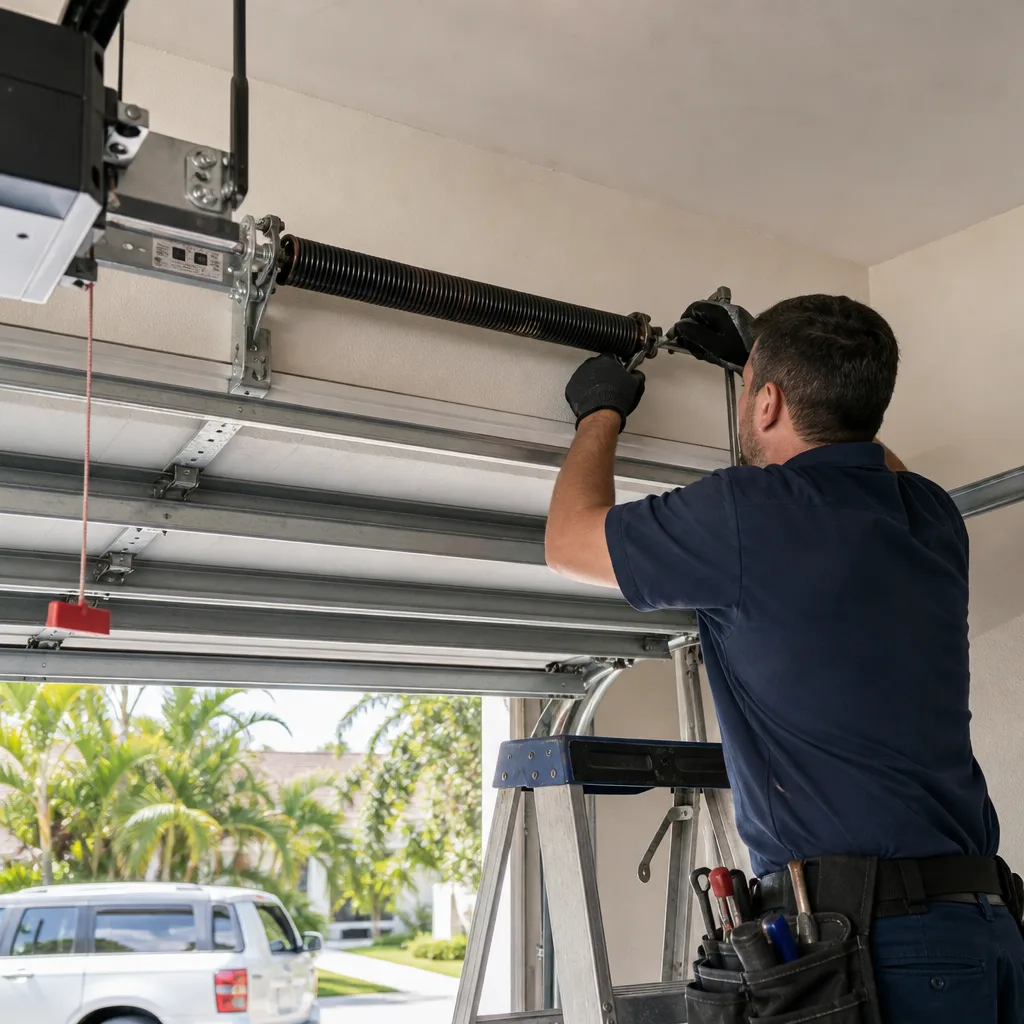
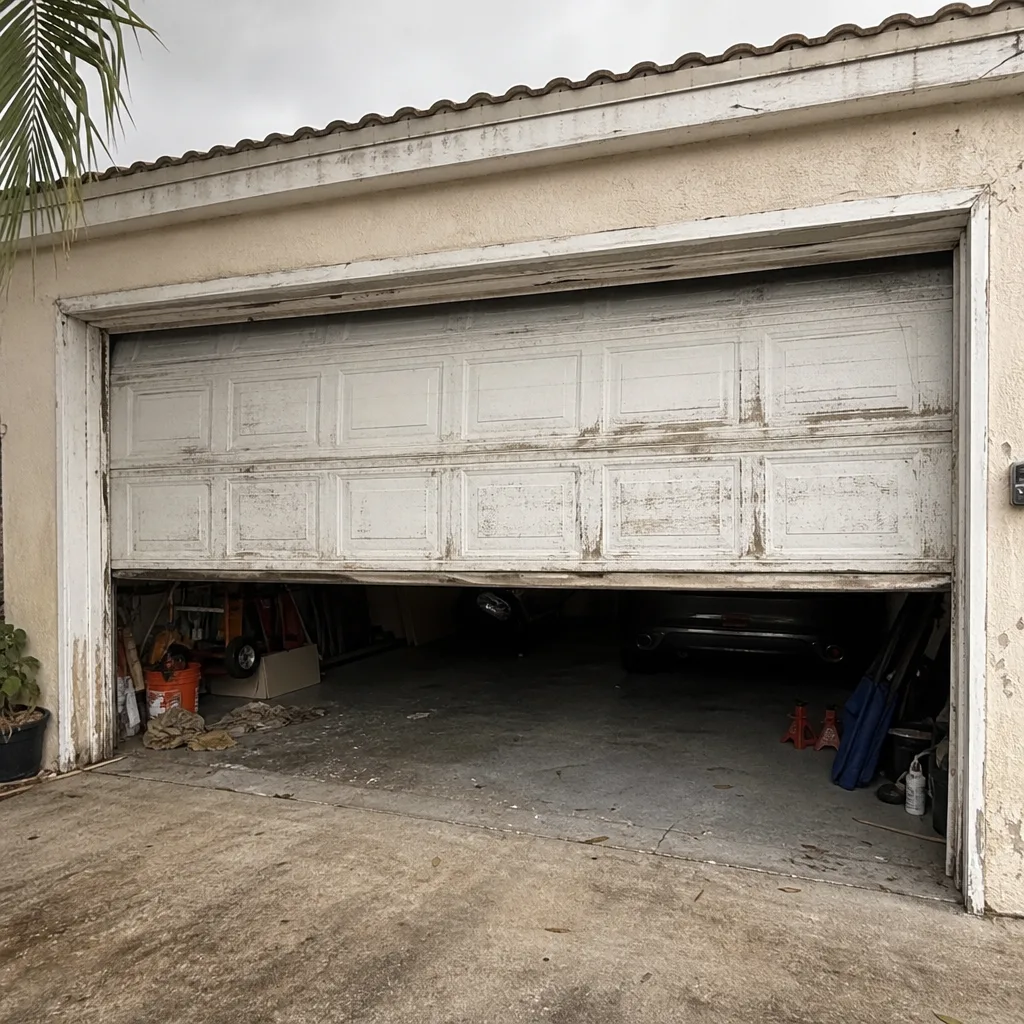
See the difference
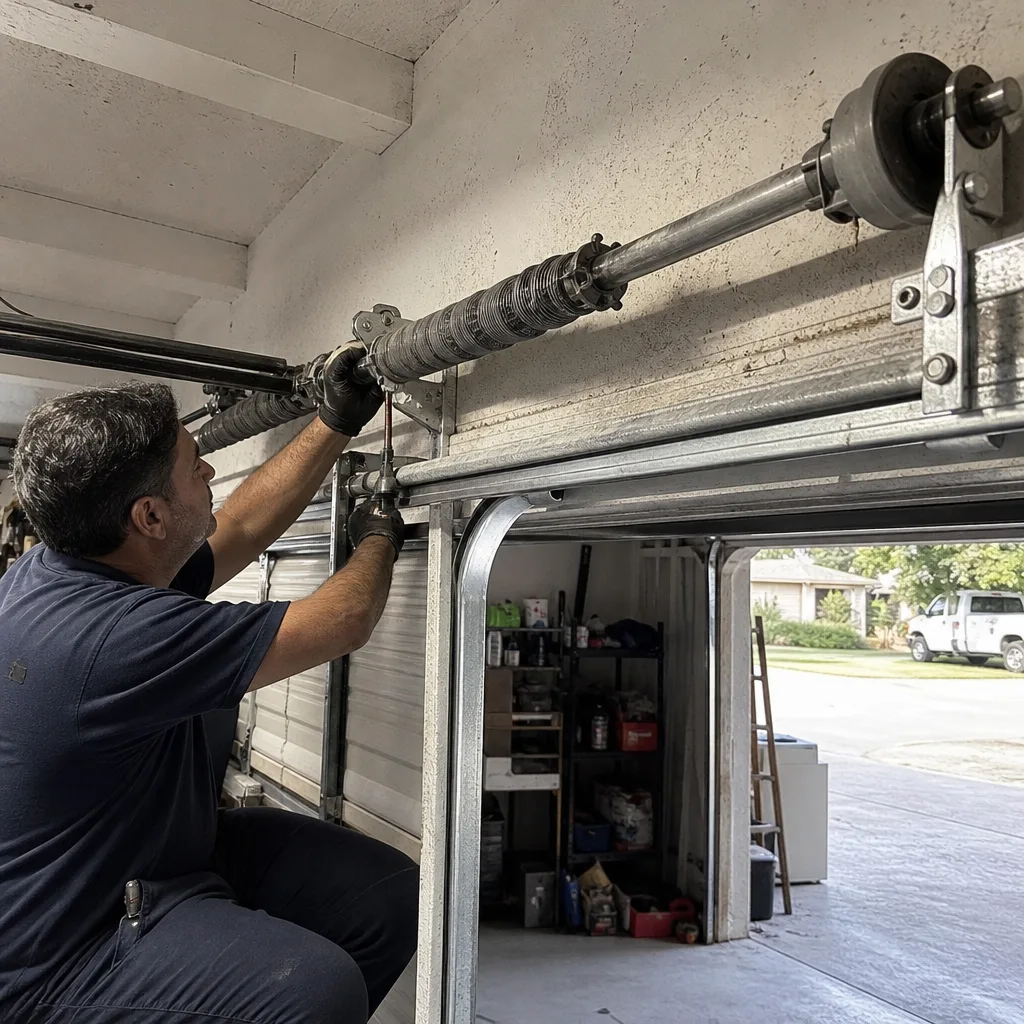 Before
 After
 Before
 After
 Before
 After
When to Call a Professional
Some conditions should stop you from touching the door at all. A torsion spring that has snapped leaves the door dead weight; attempting to lift it without the spring’s counterbalance can injure your back or cause the door to fall. A cable that has jumped off a drum means the spring tension is no longer contained safely. A door that shudders mid-travel, slams at either end, or makes a sound like a gunshot (a spring breaking) demands professional attention before the next use. And any time the door’s wind-load hardware is bent, torn, or detached after a storm, the door’s structural certification is compromised until a technician reinstalls it. Craftsman Garage Door Repair home service covers the full system, from panels and springs to opener motors and smart controls, across LiftMaster, Chamberlain, Genie, Clopay, Amarr, Wayne Dalton, Craftsman, and Raynor. We work on the brand you already have. If you’re in Miami, call (844) 734-6077 for a free estimate. The price is quoted and agreed before any work starts.
Frequently Asked Questions
Twice a year is the right interval for Miami’s climate: once in early May before hurricane season and once in December after the salt-heavy wind season. Use a silicone spray or PTFE dry lubricant on hinges, rollers, and springs, and white lithium grease on the opener rail only. Avoid petroleum-based sprays that stay wet and trap airborne salt. See Garage Door Repair Troubleshooting: Common Problems and How to Fix Them if you’re not sure which product applies to your specific door hardware, or call (844) 734-6077.
DIY maintenance runs $15 to $30 per year for silicone spray and rags. A professional garage door tune-up in Miami typically ranges from $89 to $185 depending on the door type, opener condition, and whether any small parts like rollers or seals need replacement during the visit. Craftsman Garage Door Repair quotes every service before work begins, so the price you approve is the price you pay. Call (844) 734-6077 for a free estimate.
A garage door that fails under wind pressure allows wind into the garage, which pressurizes the interior and can lift the roof off the structure. This is one of the most common total-loss scenarios in Miami hurricanes. The pre-hurricane checklist above exists specifically to confirm the door’s wind-load hardware is intact and properly fastened. If you suspect your door’s reinforcement is insufficient, review Garage Door Warning Signs: A Miami Homeowner’s Reference Guide or schedule an inspection by calling (844) 734-6077.
Bottom rollers are under cable tension and should not be removed without proper tools and training. Top rollers are safer to access, but any roller replacement on a torsion-spring door carries risk if the door isn’t properly secured. For most Miami homeowners, replacing a full roller set is a job for a technician who can do it without the spring under risk. Call (844) 734-6077 and we’ll quote the roller replacement before starting.
Yes. Salt particles carried by Atlantic winds settle on metal hardware and, combined with Miami’s humidity, create an electrolyte solution that accelerates corrosion well beyond inland rates. Aluminum components pit, galvanized coatings sacrifice themselves, and steel fasteners rust through. The December post-season service removes salt deposits before dry season bakes them onto the metal. Regular washing and the correct lubricant prevent most salt damage.
Most opener problems, including stripped gears, failed capacitors, broken travel-module logic, and worn trolleys, can be repaired without replacing the unit. That’s the brand-agnostic approach: if your Chamberlain or Genie opener has a fixable fault, the fix is usually cheaper than a new opener and takes under an hour. Garage Door Opener Repair in Miami covers all eight major brands, and the price is agreed before work begins. Call (844) 734-6077 for a diagnosis.
The Bottom Line
Miami garage doors need a maintenance approach built for salt, humidity, and wind load, not a generic four-season checklist. The May service confirms the door is hurricane-ready. The December service strips six months of salt accumulation before it becomes structural damage. Lubricate twice a year with silicone or PTFE products only. Check the monthly safety items without fail. Never touch springs or cables, and never modify wind-load hardware yourself. Follow that rhythm, and a garage door in Miami can outlast the house around it. If you’re unsure about anything on this checklist, explore more guides & resources or call Craftsman Garage Door Repair at (844) 734-6077 for a free estimate. A technician will inspect the full system, from panels to opener to smart controls, and tell you honestly what needs work and what doesn’t.
Written by the team at Craftsman Garage Door Repair, serving Miami since 2012.