

Last updated October 31, 2026
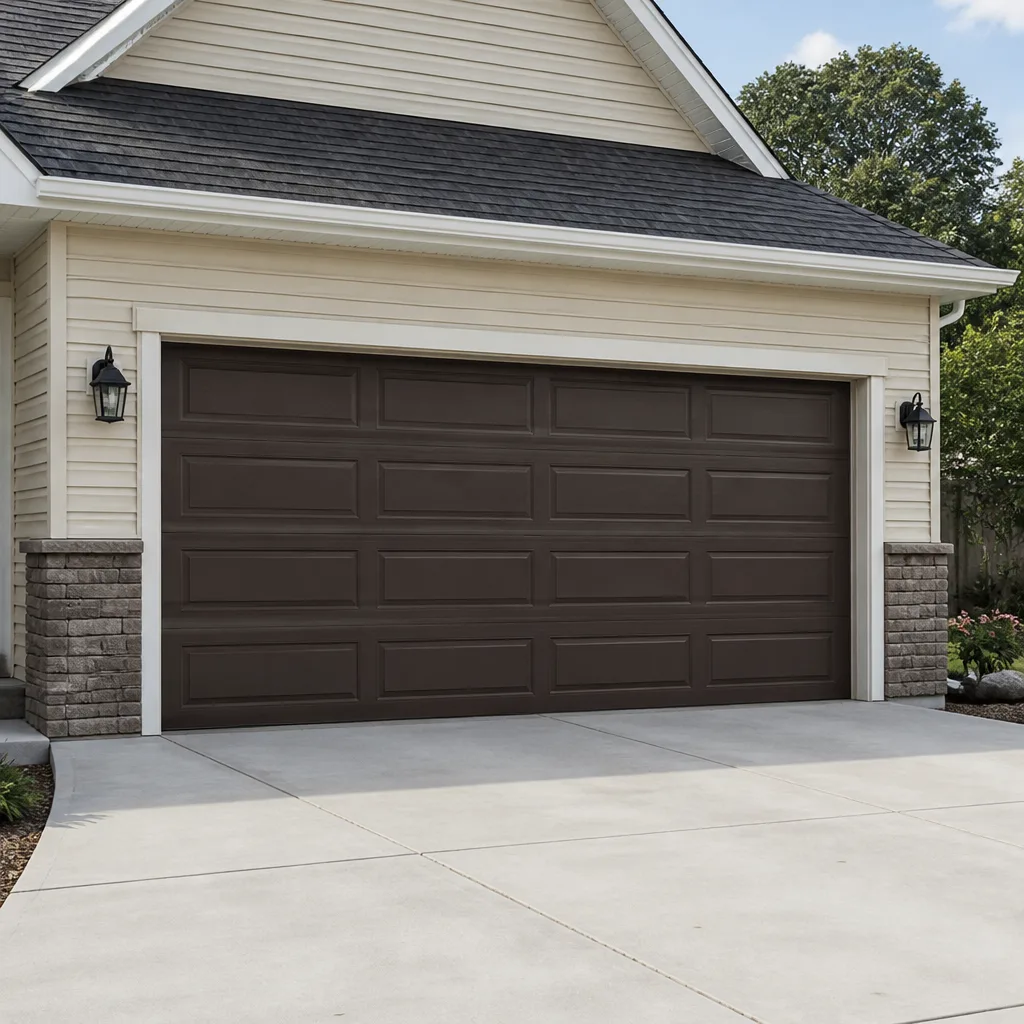 Raised-panel steel
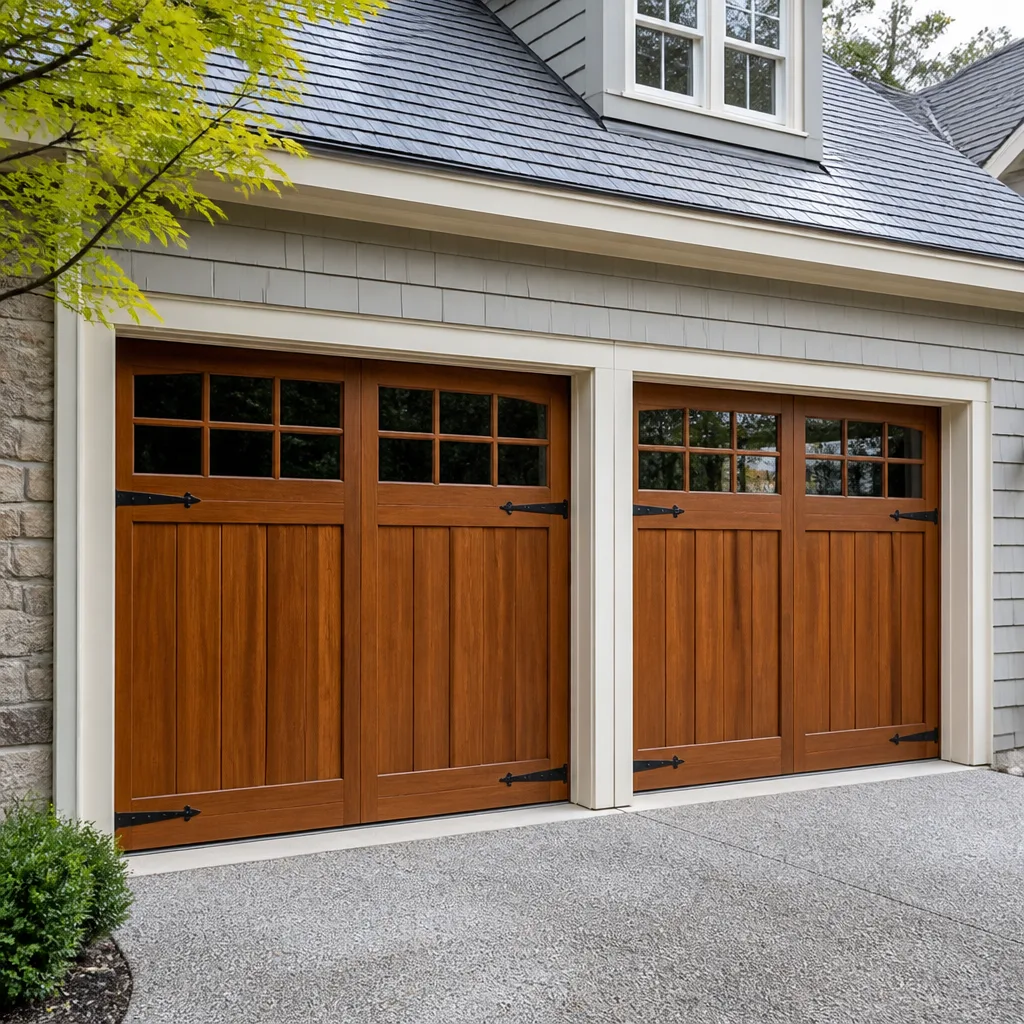 Carriage house
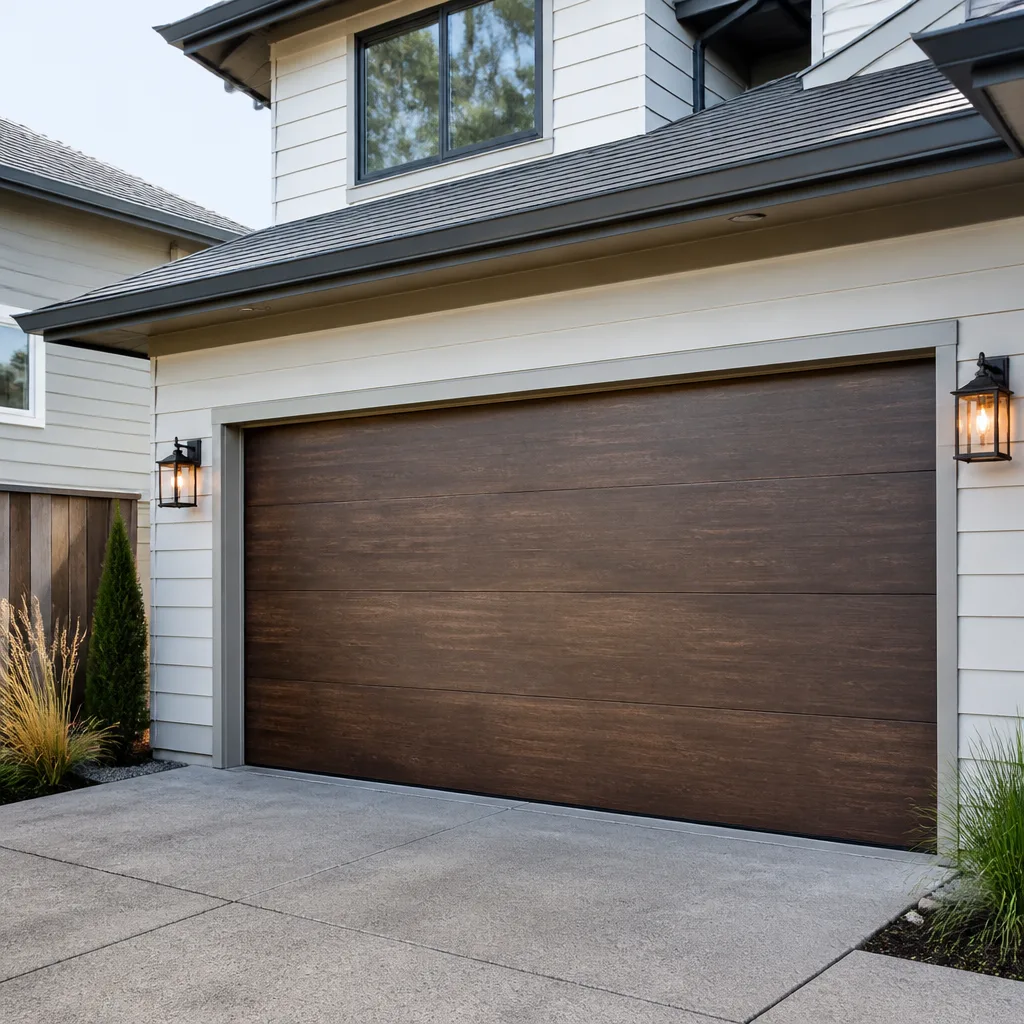 Modern flush
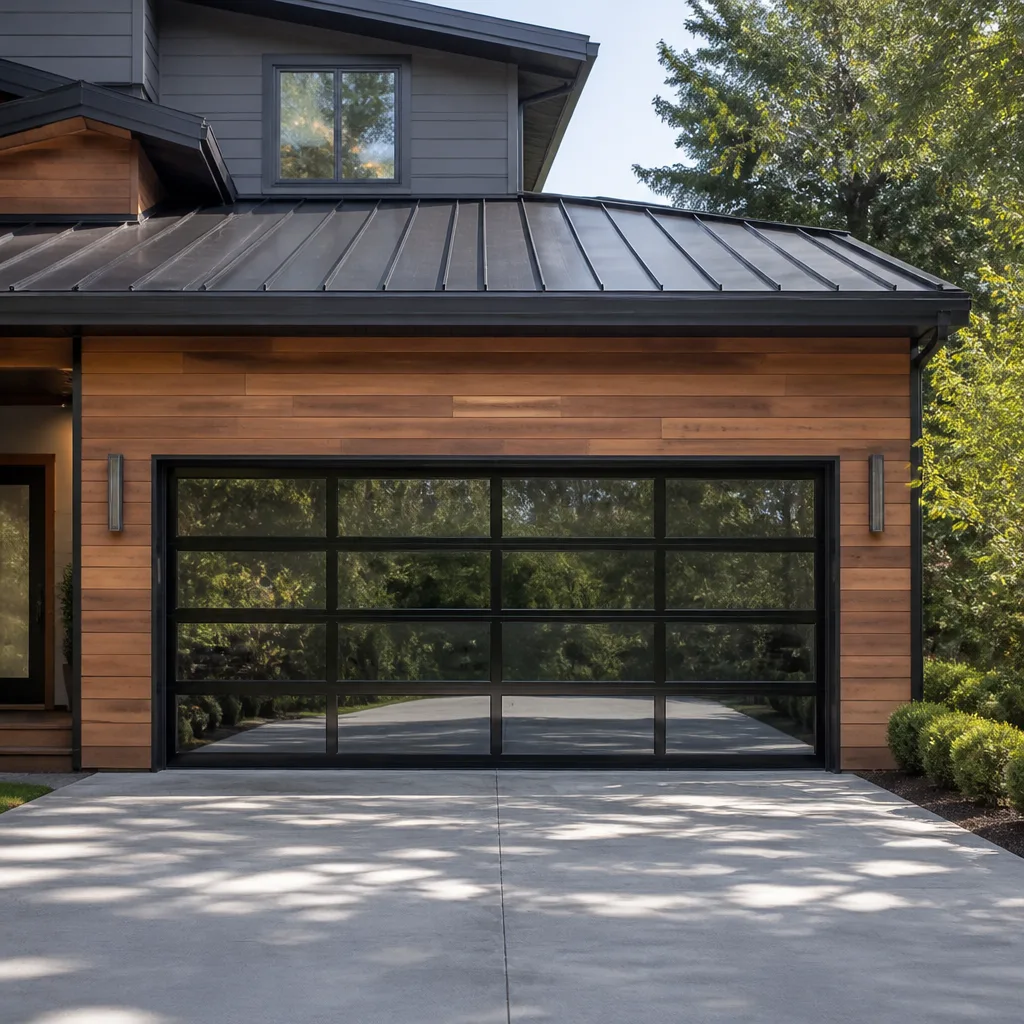 Full-view glass
 LiftMaster openers
 Chamberlain openers
Full 25-point door and opener safety check with every visit - springs, cables, rollers, tracks, and your LiftMaster or Chamberlain opener included
You get a price before we start. It does not change when the truck arrives.
Get your free estimateGarage Door Emergency Preparedness Guide for Miami Homes
When a Category 1 storm intensifies to a Cat 3 in 24 hours, as Irma did in 2017 across Miami-Dade, a garage door that can’t be secured manually becomes the structural weak point that determines whether the rest of the house survives. Garage doors cover up to 30 percent of a home’s front-facing surface area, and once wind penetrates that opening, pressure builds inside the home until the roof lifts off. This guide covers the two distinct emergency scenarios most articles ignore: mechanical failure on an ordinary day and the pre-storm scramble Miami residents know too well. For a broader look at keeping your door in top condition year-round, see our Garage Door Repair Maintenance Checklist for Miami Homeowners. You’ll learn how to manually operate your door by opener type, how to brace an unrated door when a storm approaches faster than a replacement can be scheduled, and what to keep in a garage-specific emergency kit for South Florida conditions.
Quick Answer
Garage door emergency preparedness in Miami means knowing two things: first, how to manually release and lock your door during a power outage or mechanical failure, which depends on whether you have a chain, belt, screw, or jackshaft opener and can be done at the emergency release cord in under two minutes. Second, it means having a plan to brace or secure a non-hurricane-rated door before a storm hits, because a replacement takes days to schedule but a storm can arrive overnight. Keep the correct manual release knowledge, a bracing kit, and a professional’s number on hand before you need any of it. You can also explore more guides & resources on our blog to stay prepared.
Styles & brands we work with
Table of Contents
- Miami’s Two Distinct Emergency Scenarios
- Manual Operation During a Power Outage: By Opener Type
- Hurricane Rated vs. Hurricane Braced: What Actually Holds
- The First 30 Minutes After a Spring or Cable Break
- Assessing Storm Debris Damage Before You Operate the Door
- Building a South Florida Garage Emergency Kit
- Common Mistakes to Avoid
- When to Call a Professional
Miami’s Two Distinct Emergency Scenarios
Most garage door preparedness advice online was written for climates where snow and cold are the seasonal threats. Miami has a different risk profile entirely, and it splits into two scenarios that demand opposite responses.
The first is the everyday mechanical failure: a torsion spring snaps in the heat of a July afternoon, a cable frays after years of salt-air exposure, or an opener board fails after a power surge. In this scenario, the door is stuck, your car may be trapped inside, and the goal is safe manual operation and getting the door secured until repair. This is a controlled problem with a controlled response.
The second is the pre-storm emergency: a hurricane watch is issued, you’re boarding windows, and you realize the garage door was never wind-rated or braced. Miami is in the High Velocity Hurricane Zone, which covers Miami-Dade and Broward counties and carries the strictest wind-load requirements in the state. For details on local requirements, see Garage Door Permits, Codes & Inspections in FL: What You Need to Know. Homes built after the implementation of the South Florida Building Code have doors rated for those loads, but thousands of older homes in neighborhoods like Shenandoah, Allapattah, and Westchester still have doors that predate those standards. In this scenario, you cannot schedule a replacement in time. You need a temporary bracing method that will hold long enough to protect the home’s structural envelope.
The responses to these scenarios are not interchangeable. A manual release solves scenario one. Bracing solves scenario two. Knowing which problem you’re facing is the first step in any garage door repair in Miami situation, emergency or otherwise.
Manual Operation During a Power Outage: By Opener Type
Every automatic garage door opener has a manual release mechanism, typically a red cord hanging from the trolley. Pulling it disengages the door from the opener carriage, allowing you to lift and lower the door by hand. But how you proceed after that pull depends on the opener type installed in your home.
Chain Drive Openers
Chain drive openers, common on Chamberlain and older Craftsman units, use a metal chain running along a rail. When power fails, pull the red release cord straight down toward the door. You’ll hear a click as the trolley disengages. The door will now move freely. Lift it manually using the handle, not the top panel edge. To secure the door when closed, slide the manual lock bar through the track if your door has one. If not, use a pair of vise grips clamped on the track just above a roller to prevent the door from being lifted from outside.
Belt Drive Openers
Belt drive openers, standard on many newer LiftMaster and Genie models, operate the same way but with a reinforced rubber belt instead of a chain. The release cord works identically. One difference: belt drive openers tend to have a smoother manual operation because the belt creates less resistance when disengaged. After pulling the release, the door should lift with one hand. If it doesn’t, a spring may already be broken, and you should stop and call for professional help rather than forcing the door upward.
Screw Drive Openers
Screw drive openers use a threaded steel rod. The manual release disengages the carriage from the screw. On Genie screw drive models, the release is often a short cord or a lever on the carriage itself. Once disengaged, the door operates manually like any other. Screw drive openers are less common in Miami’s current market than they were 20 years ago, but we still see them regularly in homes built in the 1990s and early 2000s in Kendall and Cutler Bay.
Jackshaft Openers
Jackshaft openers, including the LiftMaster 8500W and similar models, mount on the wall beside the torsion bar rather than on the ceiling. These are more common in Miami homes with high ceilings or limited headroom. The manual release on a jackshaft opener is typically a pull cord on the opener body itself, and disengaging it releases the door from the motor. However, because jackshaft openers rely on the door’s torsion springs for balance, a broken spring means the door will not open manually either. The springs are doing the actual lifting work on any door; the opener is just moving it. If the spring breaks on any system, manual operation becomes extremely difficult or impossible, and attempting it can cause injury.
One warning applies to every opener type: when the door is in the open position and the opener is disengaged, the door can come down hard if the springs are weak or broken. Never stand under a door that has been manually released unless you have confirmed the springs are intact and the door holds position at the midpoint on its own, meaning it stays put when opened halfway. If it drifts downward, the springs are compromised. Lower the door carefully and call for service.
Hurricane Rated vs. Hurricane Braced: What Actually Holds
The difference between a hurricane-rated garage door and a braced garage door comes down to engineering and timing.
A hurricane-rated door, often labeled as a wind-load rated door or Miami-Dade NOA (Notice of Acceptance) approved, is designed and tested from the factory to withstand specific positive and negative wind pressures. These doors have reinforced stiles, heavier gauge steel or aluminum, and track systems with additional jamb brackets securing them to the structure. Brands like Clopay and Amarr produce wind-rated models specifically tested for the High Velocity Hurricane Zone. If your door carries a Miami-Dade NOA sticker, it was manufactured to those standards.
But plenty of Miami homes don’t have rated doors. The home was built before the stricter codes, or the door was replaced at some point with a standard model because the homeowner didn’t know the difference. When a storm is 72 hours out, you cannot install a rated door in time. Your option is bracing.
Bracing a garage door involves installing vertical steel struts or posts across the interior face of the door, anchored to the floor and the header above. These braces transfer wind pressure from the door surface to the home’s structure rather than letting the door flex until it fails. Several manufacturers produce retrofit bracing kits that install in a few hours with basic tools. A properly braced non-rated door will not equal a factory rated door’s performance, but it can significantly reduce the likelihood of wind penetration in the most common storm scenarios Miami sees.
Here’s the sequence if a storm is approaching and your door is not rated:
- Confirm the storm’s projected arrival and intensity. If you have more than 5 to 7 days, consult a professional about installing a wind-rated door instead of bracing. If replacement isn’t feasible in the window, proceed with bracing.
- Close the door and disconnect the automatic opener by pulling the release cord. You do not want the opener trying to move a braced door.
- Install vertical bracing struts according to the kit’s instructions, anchoring each strut to the concrete floor with wedge anchors and to the header with lag bolts into solid framing.
- Secure the emergency release cord up and away so it cannot be snagged accidentally.
- Lock any manual slide locks on the door tracks. If none exist, use track clamps on both sides below a roller.
- Take photos of the installation before the storm. If you need to file an insurance claim afterward, having documentation of the bracing helps.
After the storm passes and the threat is gone, remove the bracing and have the door inspected for stress damage before returning it to normal automated use. A full-system check by a technician who understands wind-rated engineering is worth the time, which is part of what we cover in any garage door installation in Miami conversation when homeowners ask whether bracing or replacement is the right call.
The First 30 Minutes After a Spring or Cable Break
A torsion spring breaking sounds like a gunshot inside the garage. It’s startling and loud, and the immediate aftermath is often confusion. Here’s what to do in the first 30 minutes, which matters for safety and for the repair bill.
- Do not touch the spring or cable. Torsion springs under tension store enough energy to cause serious injury or death. Even a broken spring may still have tension on the remaining coils. The cable is also dangerous when its spring has failed: it can whip free and move unpredictably. Stay clear of the area directly beneath and around the spring bar and cable drums.
- Do not attempt to open the door with the opener. The opener motor may try to lift a door that now has no counterbalance. This can burn out the opener, damage the top panel, and in some cases rip the opener off its mounting. If the door is closed, leave it closed. If it’s open, proceed carefully to step 3.
- If a car is trapped inside and the door is closed: Do not try to lift the door manually. A door with a broken spring weighs 150 to 250 pounds and can drop on you or your vehicle. Call a professional immediately. This is not a DIY moment. If the door is open and a car needs to exit, back the car out slowly while watching the door. Do not stand under the door. Once the car is out, lower the door carefully only if it can be controlled; otherwise, secure the area and call for service.
- Inspect the visible condition from a safe distance. Look at the spring bar. A torsion spring typically breaks into two pieces with a visible gap. Cable breaks are visible as frayed or separated strands near the bottom roller bracket. Take a photo from several feet away for reference, but do not get close.
- Note the spring type and color. Residential torsion springs are color-coded by wire gauge and inner diameter. If you can safely see a paint mark on the broken spring’s winding or stationary cone, note the color, or count the coils per inch from your photo. Technicians use this to match the replacement spring correctly.
- Call for professional repair. Spring and cable replacement is not a homeowner repair task. The springs are under tension measured in dozens of turns on the winding cone, and the correct balance depends on matching spring wire size, inner diameter, length, and the door’s weight. At Craftsman Garage Door Repair, we replace the full spring assembly when appropriate, not just the broken side, because a door balanced on one new spring and one old spring wears unevenly and fails again faster. We work on the spring systems across all eight major door brands we service, including Wayne Dalton and Amarr, whose spring configurations differ from conventional torsion systems.
The average cost for a torsion spring replacement in Miami ranges from $180 to $340 for a standard double-spring assembly on a 7-foot door, with higher costs for 8-foot doors or heavier wood doors. The price is quoted and agreed before any work starts, and the repair typically takes under two hours.
Assessing Storm Debris Damage Before You Operate the Door
After a storm passes, the garage door may have taken hits from flying debris: palm fronds, roof tiles, branches, even patio furniture. Before you press the opener button, you need to determine whether the door is structurally compromised or cosmetically damaged. Operating a compromised door can cause further damage or injury.
Step 1: Visual inspection from outside. Walk the full width of the door and look for obvious deformation. A door that has been pushed inward will show it as a bow or ripple in the panel face. Check the top panel especially, since it takes the most wind pressure when the door is braced or partially secured. Minor dents are cosmetic. A visible bow of more than half an inch across a panel span is structural.
Step 2: Check the track alignment. Look at both vertical tracks from inside the garage. They should be straight and parallel. If a track is bent, crimped, or has pulled away from the jamb brackets, do not operate the door. A roller can bind in a damaged track and force the door sideways, which can pop rollers out and drop the door.
Step 3: Disconnect the opener and test the door manually. Pull the red release cord first. Lift the door a few inches by hand and let it settle. It should feel balanced and smooth. If it feels heavy, catches at a point, or makes grinding sounds, stop and get a professional evaluation. This manual test tells you whether the springs and rollers survived the event, which matters because storm debris damage often coexists with spring or cable damage from the same impact.
Step 4: Check the opener operation without the door connected. Run the opener with the door disengaged and watch the trolley move through its full travel. If the opener moves smoothly, the motor and logic board likely survived. If it hesitates, grinds, or reverses, the opener may have been damaged by a power surge during the storm, which is a separate repair from the door itself. Surge damage is common in Miami’s frequent electrical storms, and we handle it as part of our garage door opener repair in Miami service, including board replacement and motor diagnosis on LiftMaster, Genie, and Chamberlain units.
One detail many homeowners miss: after any significant storm impact, the door’s balance should be rechecked even if everything looks fine. A door that took an impact while in the closed position may have shifted spring tension or slightly bent a panel. Running it for months with those changes accelerates wear on the rollers, hinges, and opener. A professional balance check is faster and cheaper than the repairs that follow if it’s skipped.
Building a South Florida Garage Emergency Kit
Every Miami home should have hurricane supplies, but the garage-specific emergency kit is rarely included in the standard list. Here’s what we recommend keeping in a labeled bin in the garage, based on what we’ve seen needed most often after storms and mechanical failures in this market.
- Track clamps or vise grips: Two heavy-duty clamps that can lock onto the vertical track below a roller to prevent the door from being lifted manually. This is the simplest way to secure a door that can’t be locked by other means.
- Manual release cord tag or marker: The red release cord is often hard to find in a dark garage during a power outage. Attach a bright tag or a piece of reflective tape to it so you can locate it quickly.
- Spare batteries for the opener remote and keypad: Most remotes use standard coin or AA batteries. Keep spares in the kit. Program the keypad before storm season and write the code down. In a power outage, the keypad still works if the opener has battery backup, but the remote synced to your car’s HomeLink will not function without the opener’s power.
- Headlamp or flashlight: A headlamp keeps both hands free for manual door operation. Store it in the kit, not elsewhere, so it’s where you need it when the power is out.
- Spare emergency release key: If your garage has no service door or pedestrian entry, an exterior emergency release kit lets you pull the release cord from outside. These are installed through the top panel and are worth having on doors where the garage is the only access point.
- Penetrating lubricant: A can of white lithium grease or a garage door specific lubricant for hinges, rollers, and tracks. Salt air in Miami’s coastal neighborhoods from Brickell to Aventura corrodes hinges and rollers faster than inland areas, and a lubricated door operates more smoothly during manual use.
- Photos of the door’s make, model, and any labels: Photograph the manufacturer’s label, the spring configuration, and the opener’s model number. If you need emergency service, having this available speeds up diagnosis. It’s also useful for insurance documentation if the door is damaged in a storm.
- The phone number of a garage door professional you trust: Before an emergency is the right time to identify who you’ll call. In an emergency, you don’t want to be researching options while a storm approaches or a spring is broken with your car trapped inside.
Common Mistakes to Avoid
- Using the automatic opener during a wind event. High winds create pressure differentials that can push the door off plane while the opener is trying to move it. The opener fights the wind, the door binds, and the opener burns out or the door gets damaged. Disconnect and operate the door manually or leave it closed and braced.
- Forcing a door open when it feels heavy. A heavy-feeling door means the springs are failing or failed. Forcing it risks a sudden drop of 150-plus pounds of door weight. This is how people get hurt and how doors get damaged beyond repair.
- Waiting until a hurricane watch to schedule door maintenance. The week before a storm is the busiest time of year for garage door companies in Miami, and many homeowners who waited get turned away simply because schedules fill up. Annual maintenance in the spring, before hurricane season starts in June, is the move.
- Assuming a newer home automatically has hurricane-rated doors. Code requirements have changed over the years, and some builders in Miami-Dade installed doors that met the code at the time but would not pass today’s wind-load testing. Check for the NOA sticker or label on the door itself rather than assuming.
- Attempting spring or cable repair without training. Torsion springs store enough energy to cause catastrophic injury. This is not a task to learn from a YouTube video. The cost of professional repair is a fraction of what an emergency room visit costs.
- Ignoring unusual sounds. A door that starts popping, grinding, or straining is signaling a problem that will become an emergency eventually. Addressing a worn roller or hinge early costs far less than a snapped spring taking out the top panel on its way down.
- Not testing the manual release before you need it. The red cord is designed to be pulled once in an emergency, but many Miami homeowners have never pulled it and don’t know how their specific opener disengages. Practice it once under normal conditions, then re-engage the opener and confirm it reconnects properly. In an emergency, you’ll know exactly what to expect.
When to Call a Professional
Some garage door problems are routine maintenance you can handle yourself: lubricating hinges, tightening visible bolts on the track brackets, replacing remote batteries. Others require a trained technician with the right tools and experience. Call a professional when a spring breaks, when a cable frays or snaps, when the door is off its track, when a panel is dented deeply enough to affect structural integrity, or when an opener fails electrically. Also call if you’ve experienced storm damage and are uncertain whether the door is safe to operate. Craftsman Garage Door Repair serves Miami and surrounding areas with garage door repair, opener repair, and full installation services, and we work on the brand you already have rather than steering you toward a replacement. For a free estimate, call (844) 734-6077.
See the difference
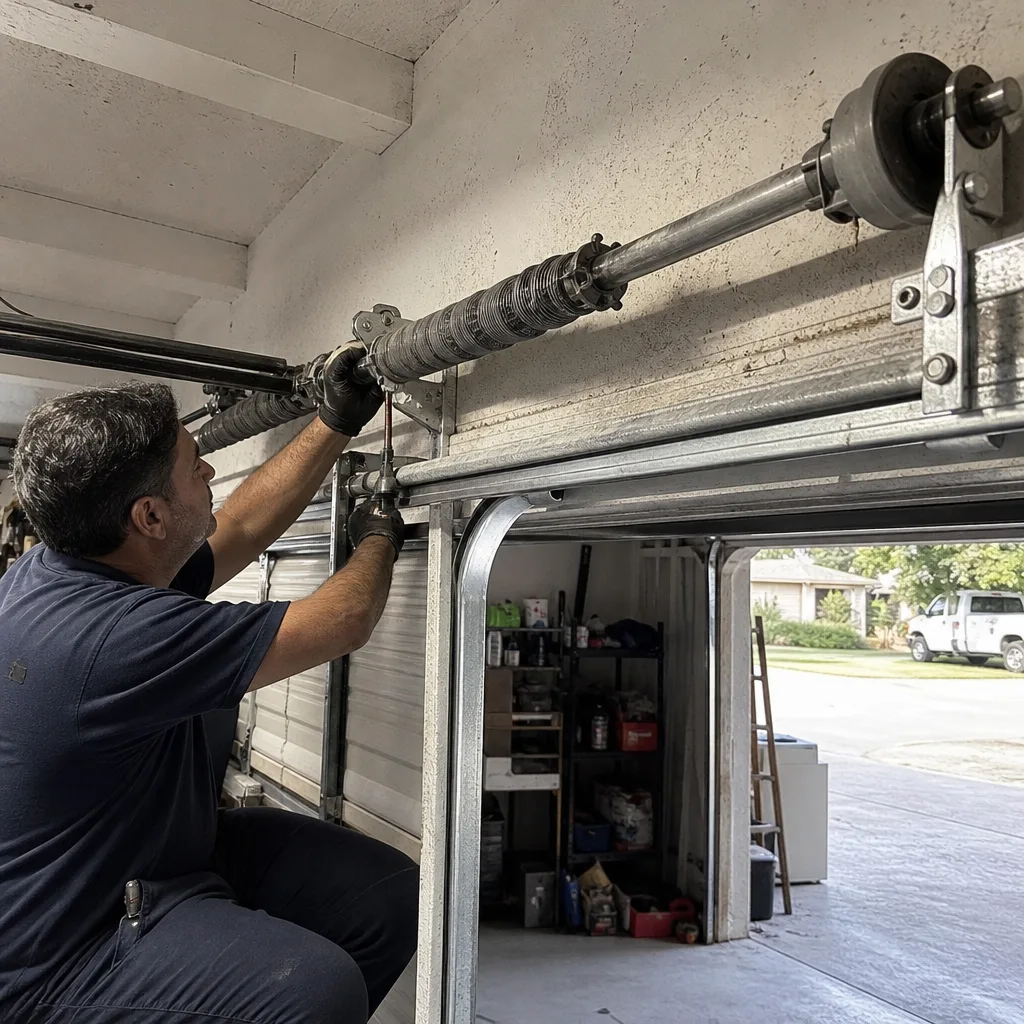 Before
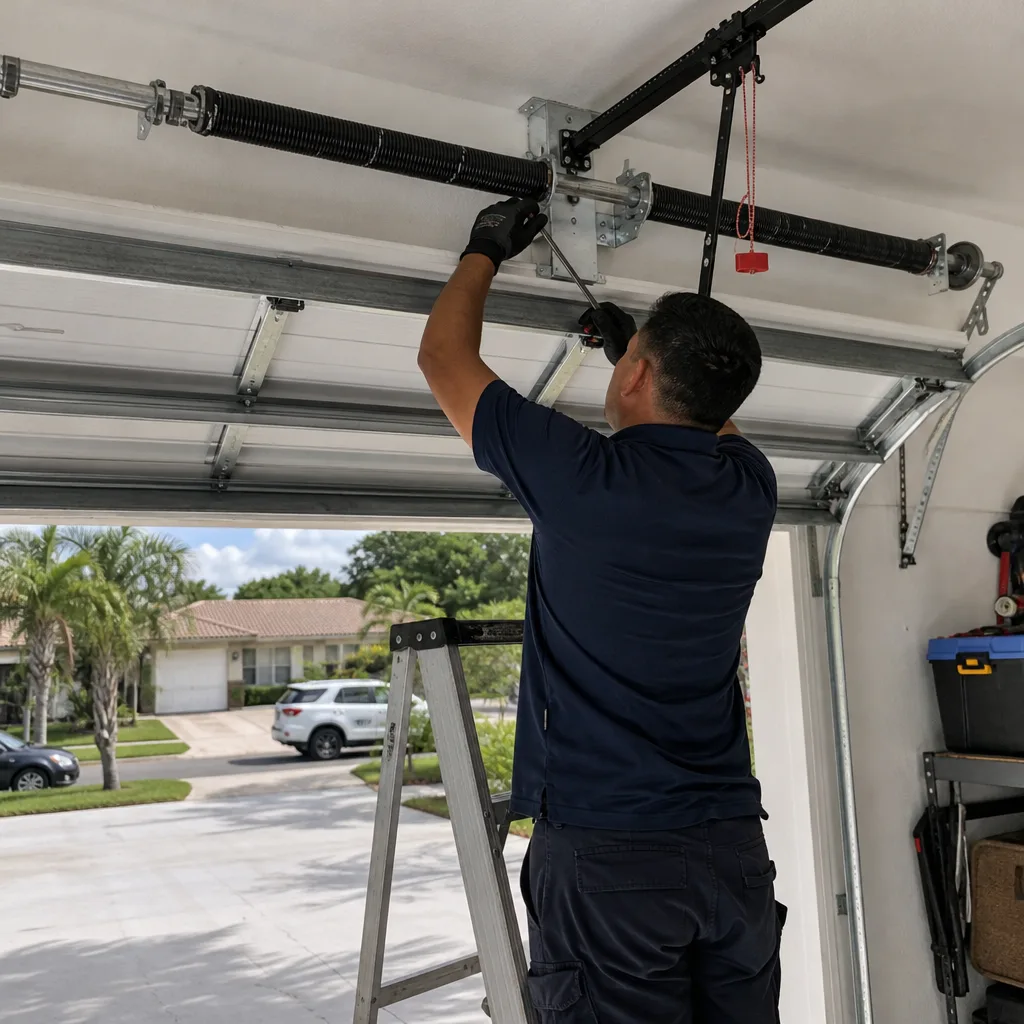 After
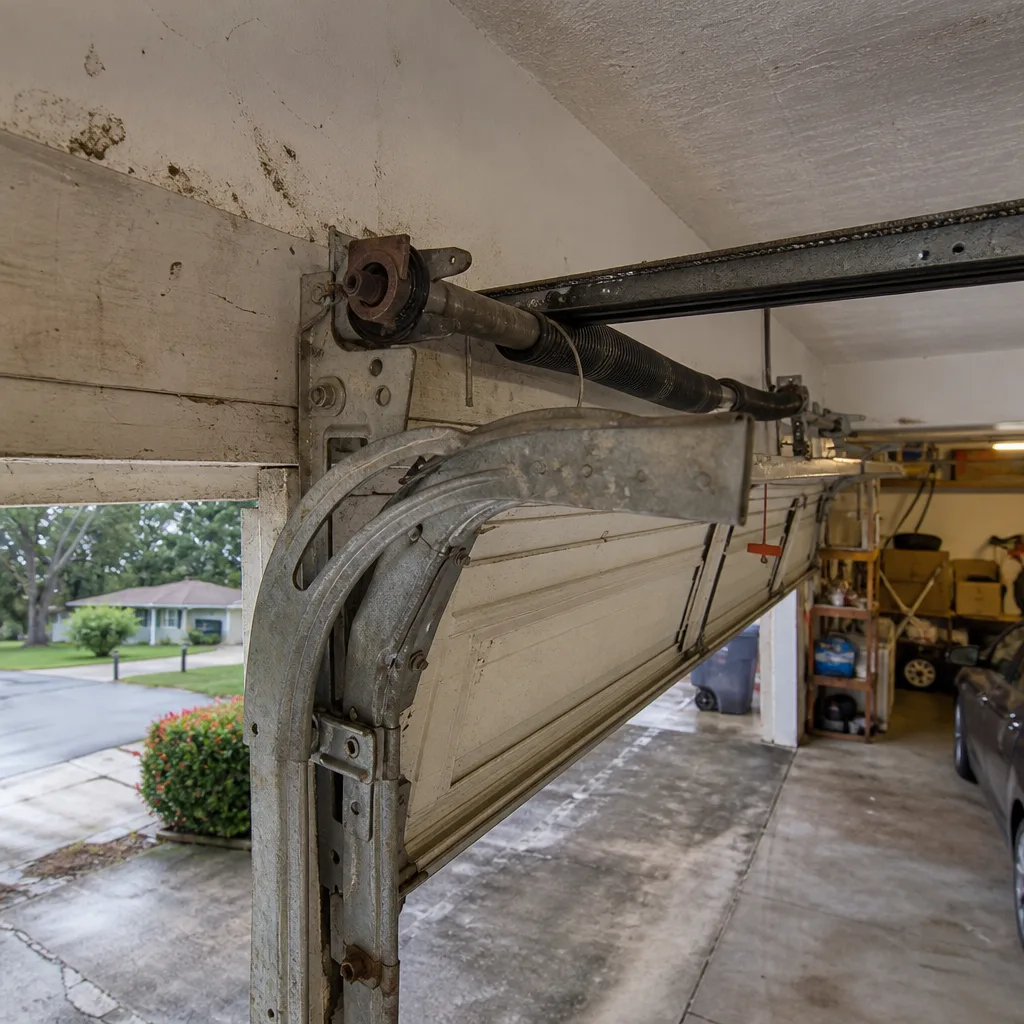 Before
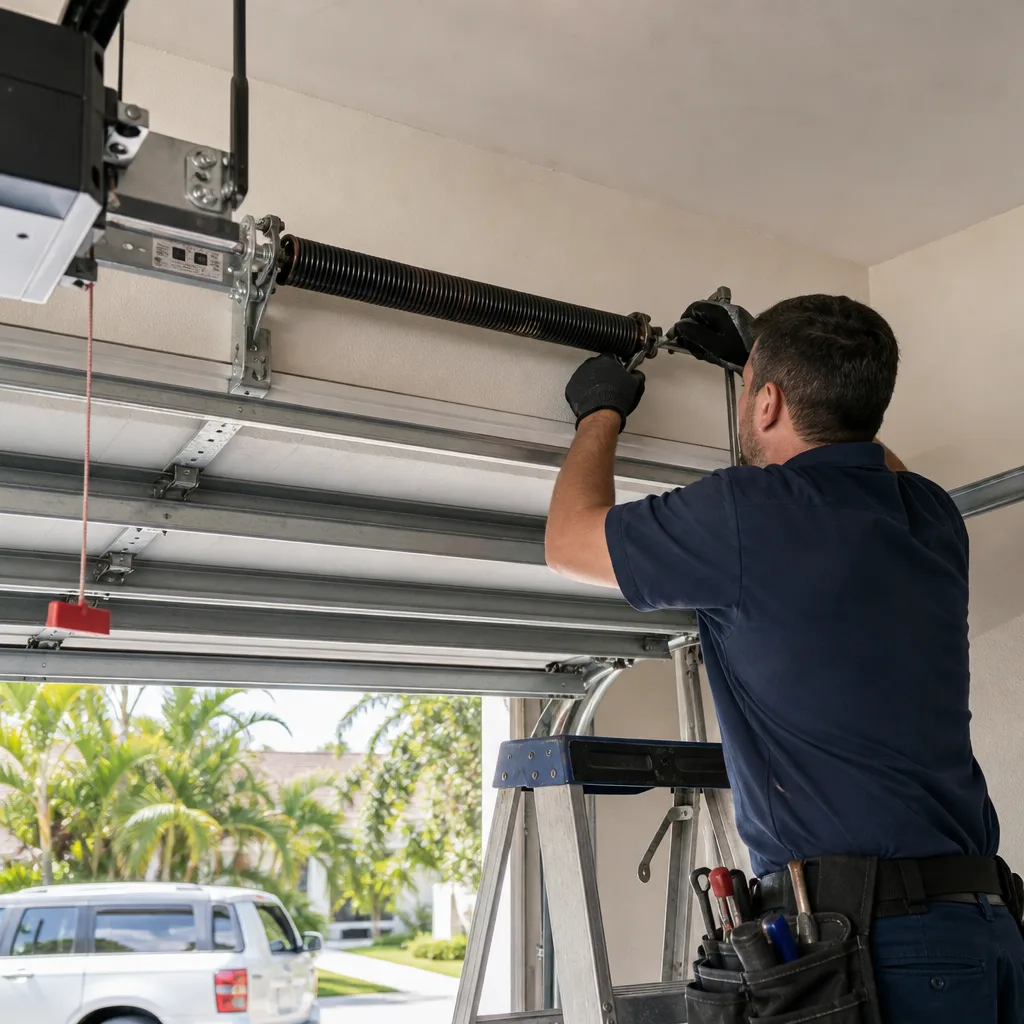 After
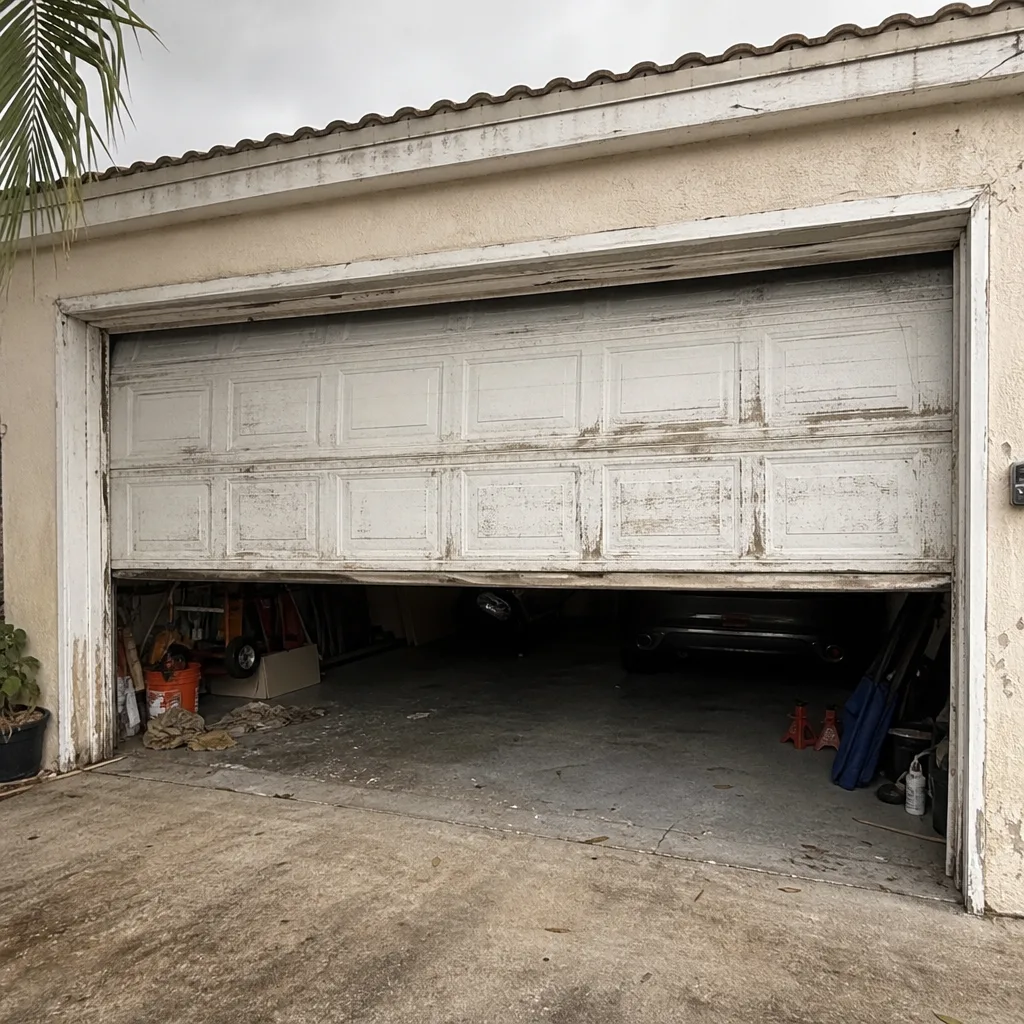 Before
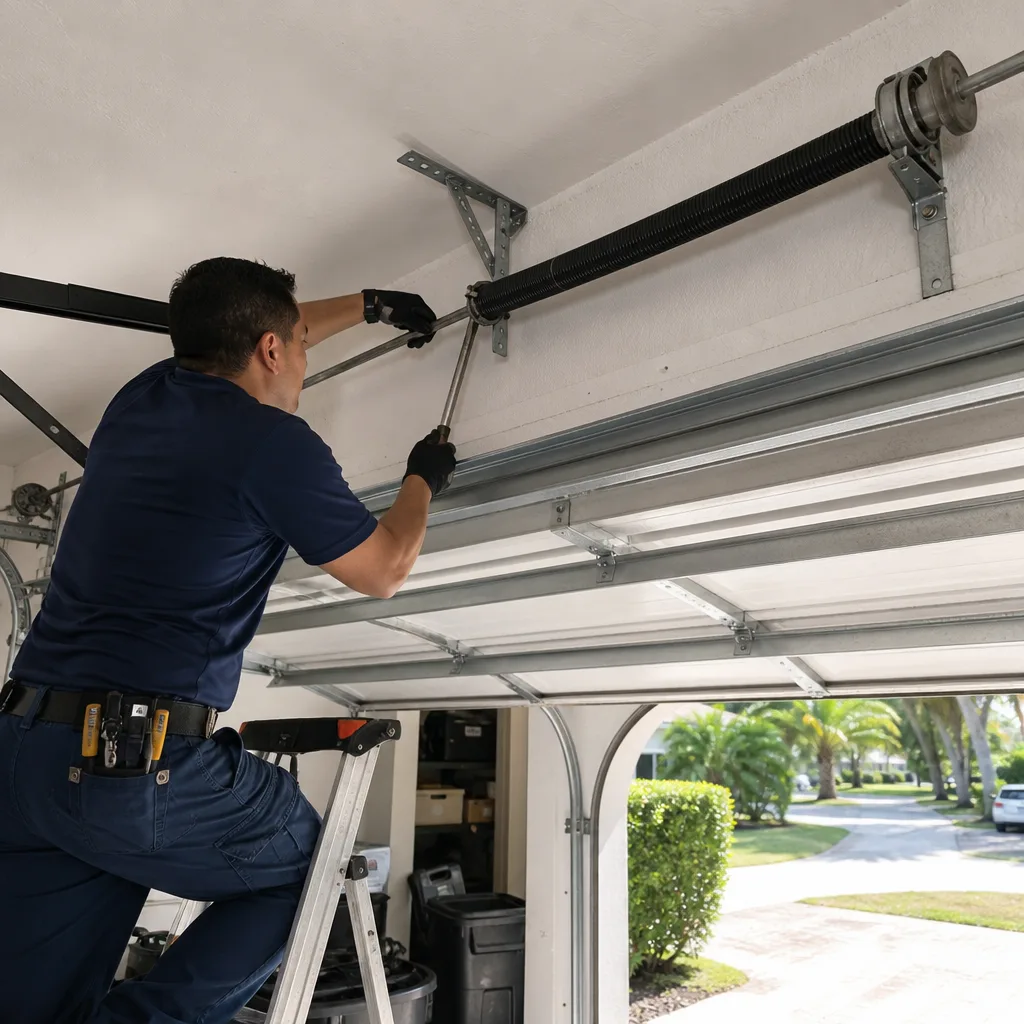 After
Frequently Asked Questions
Yes, you can open your garage door manually during a power outage by pulling the red emergency release cord hanging from the opener rail, which disengages the door from the opener carriage and allows you to lift it by hand. The specific steps for chain, belt, screw, and jackshaft openers are covered in our section on manual operation above. If the door will not lift smoothly after releasing the opener, the springs may be broken and you should call (844) 734-6077 before forcing it.
Emergency garage door repair in Miami typically costs between $180 and $340 for a standard torsion spring replacement, the most common emergency repair, with other repairs ranging from $125 for a roller or cable repair to $700 or more for major structural or opener replacement work. The exact price depends on your door’s size, weight, and spring configuration. Craftsman Garage Door Repair quotes the full price before any work starts, so there are no surprises on the invoice. Call (844) 734-6077 for a free estimate.
No, the price quoted to you before work begins is the price you pay, and we confirm it in writing before any repairs start. The only legitimate variable is if additional damage is discovered during the repair that was not visible at the time of the quote, and in that case, we stop and get your approval on the adjusted cost before proceeding. This is how we keep every garage door repair in Miami honest and predictable, and it’s a hard business rule, not a soft promise.
Yes, our service vehicles in Miami are stocked with common torsion and extension springs in multiple wire gauges and inner diameters, cables, rollers, hinges, and repair parts for LiftMaster, Chamberlain, Genie, Clopay, Amarr, Wayne Dalton, Craftsman, and Raynor systems. This means most repairs are completed in a single visit rather than requiring a second trip after ordering parts. For less common parts, we source them locally from Miami suppliers and typically have them within one business day.
We do our best to accommodate pre-storm repair and bracing requests, but during an active hurricane watch our schedule fills quickly and we prioritize structural concerns like broken springs and failed panels over cosmetic work. If your door is not functioning and a storm is approaching, call (844) 734-6077 as early as possible and describe the specific problem. The more notice you give us, the more likely we can get a technician to your Miami home before the weather arrives.
A hurricane-rated garage door in Miami will have a Miami-Dade County NOA (Notice of Acceptance) sticker or label on the door or on the installation paperwork showing it meets High Velocity Hurricane Zone wind-load requirements. If you cannot find this sticker in Miami-Dade or Broward County and you’re unsure, a professional inspection can verify the door’s construction and hardware. If the door is not rated and a storm is approaching faster than a replacement can be scheduled, temporary bracing is the appropriate step, and we can advise on the right approach for your specific door.
The Bottom Line
Garage door emergencies in Miami fall into two categories, and the prepared homeowner knows how to respond to both. For mechanical failures like broken springs, the response is manual release knowledge, safe restraint, and a professional call before forcing anything. For hurricane threats, the response is knowing whether your door is rated, bracing it properly if it isn’t, and never gambling on the largest opening in your home holding against Category 3 winds without reinforcement. Practice the manual release before you need it, keep a garage-specific kit stocked, and have a trusted professional identified in advance. The time to prepare is when the forecast is clear and the door is working, not when the storm is 48 hours out or the spring has just snapped.
For any garage door concern in Miami, from pre-storm bracing advice to emergency spring replacement, call Craftsman Garage Door Repair at (844) 734-6077 for a free estimate. We’re a multi-brand specialist that services, repairs, and replaces virtually any system you already own, from the panels to the springs to the smart opener controls. We work on the brand you already have, and we do it to a craftsman’s standard.
Written by the team at Craftsman Garage Door Repair, serving Miami since 2012.