

Last updated October 31, 2026
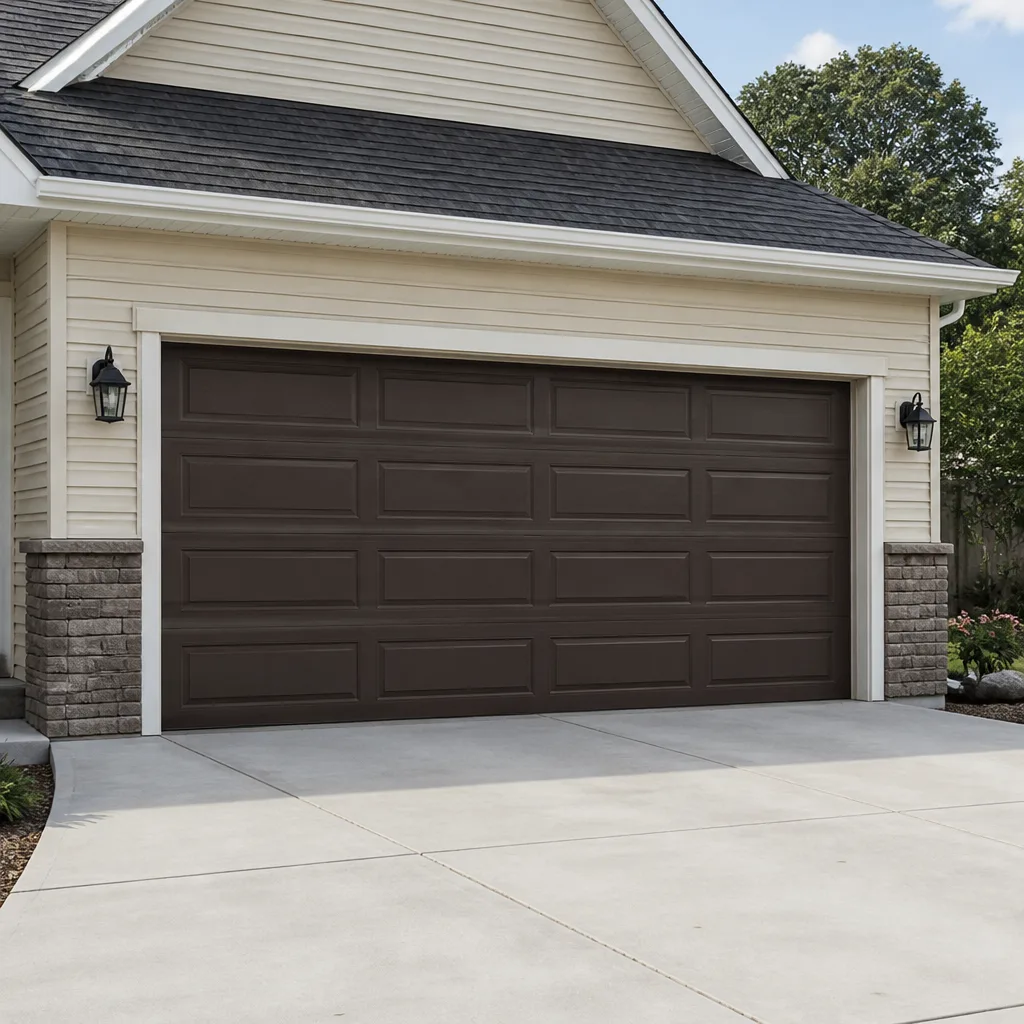 Raised-panel steel
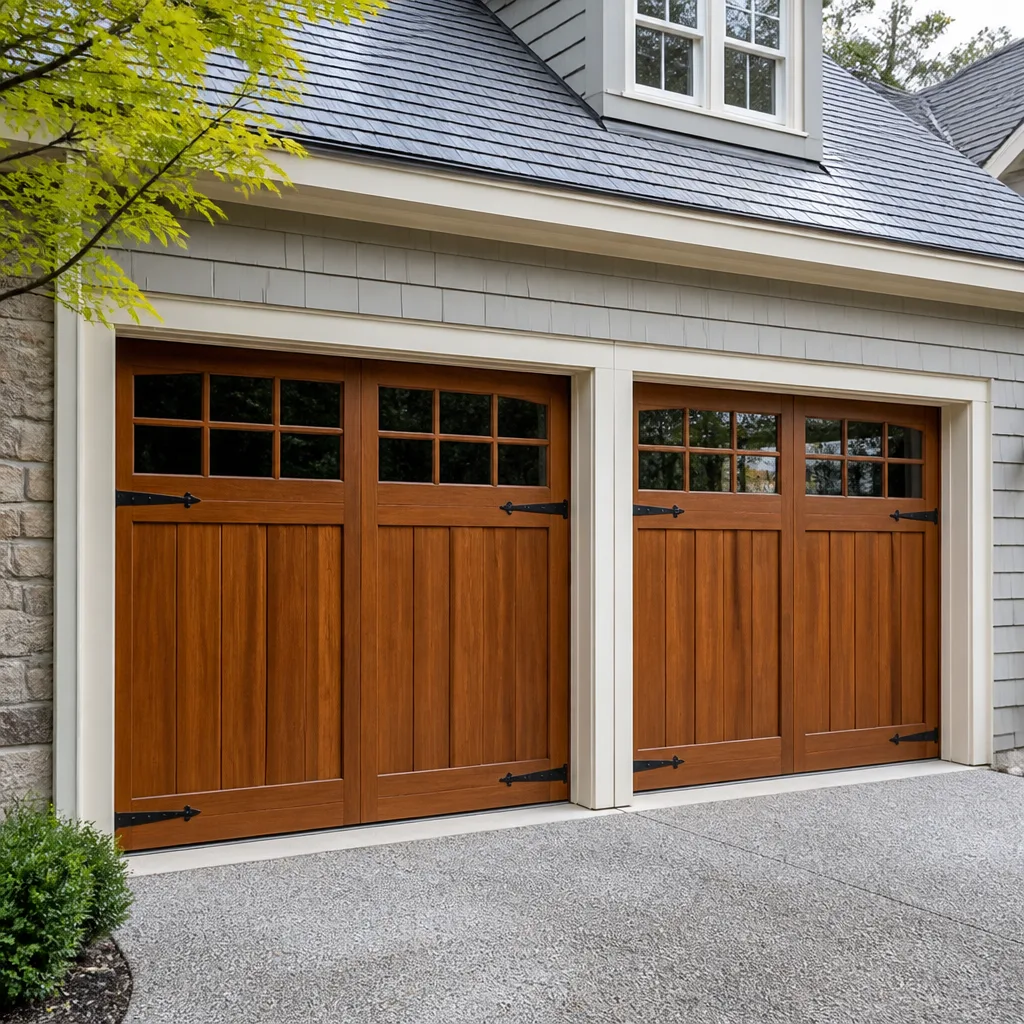 Carriage house
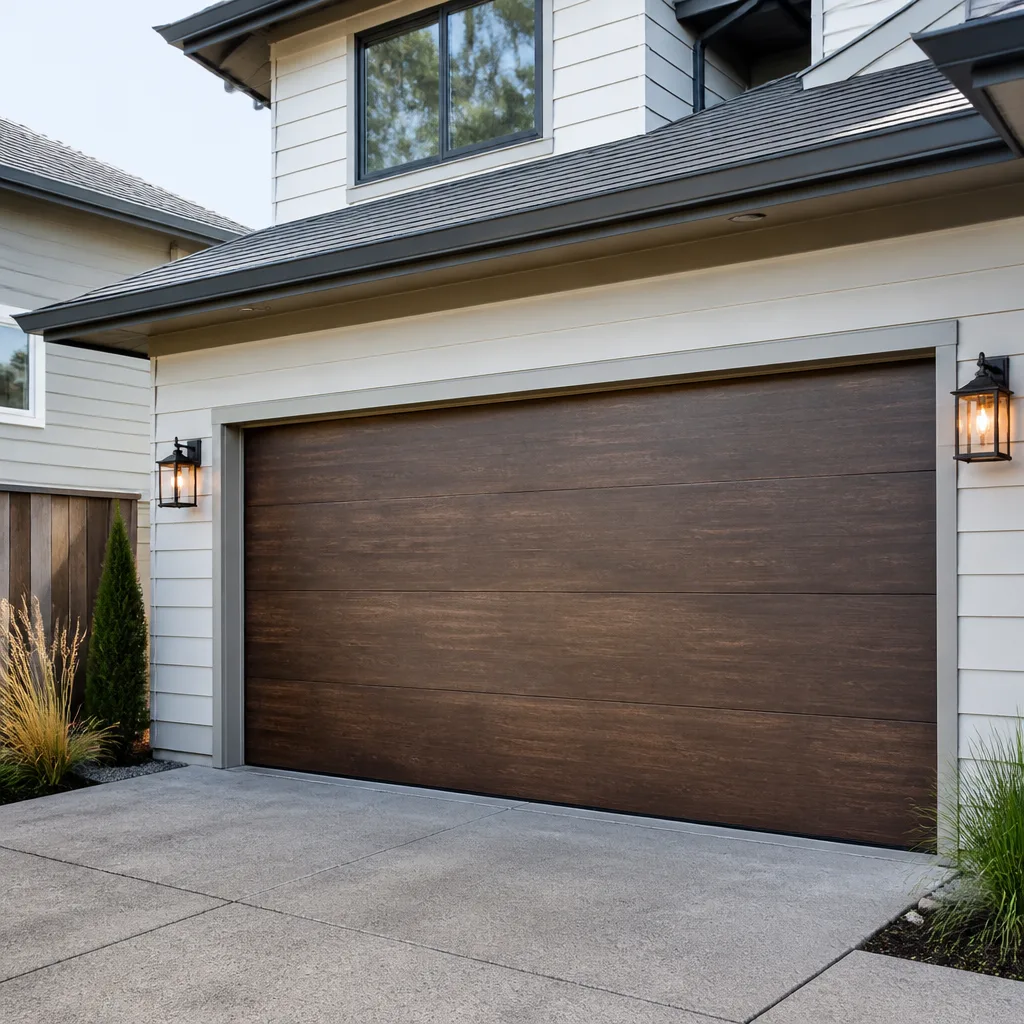 Modern flush
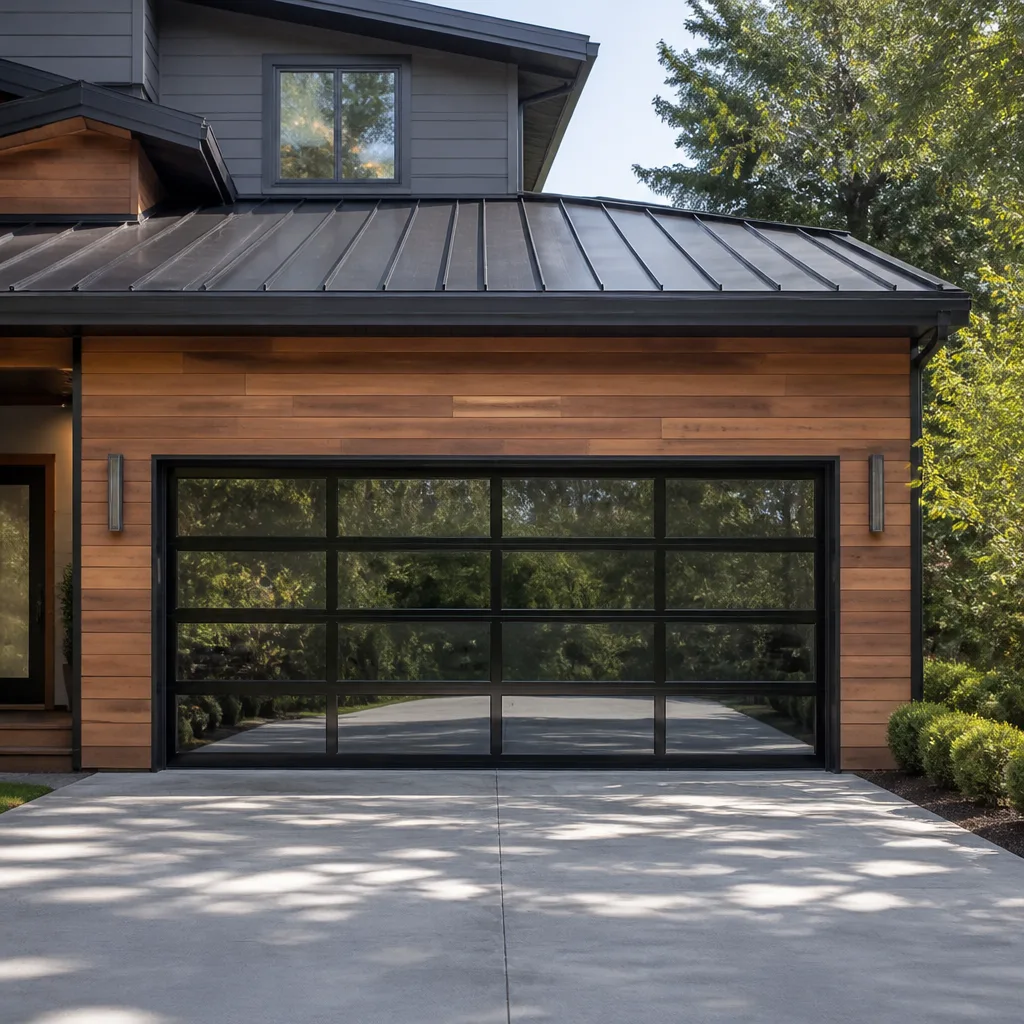 Full-view glass
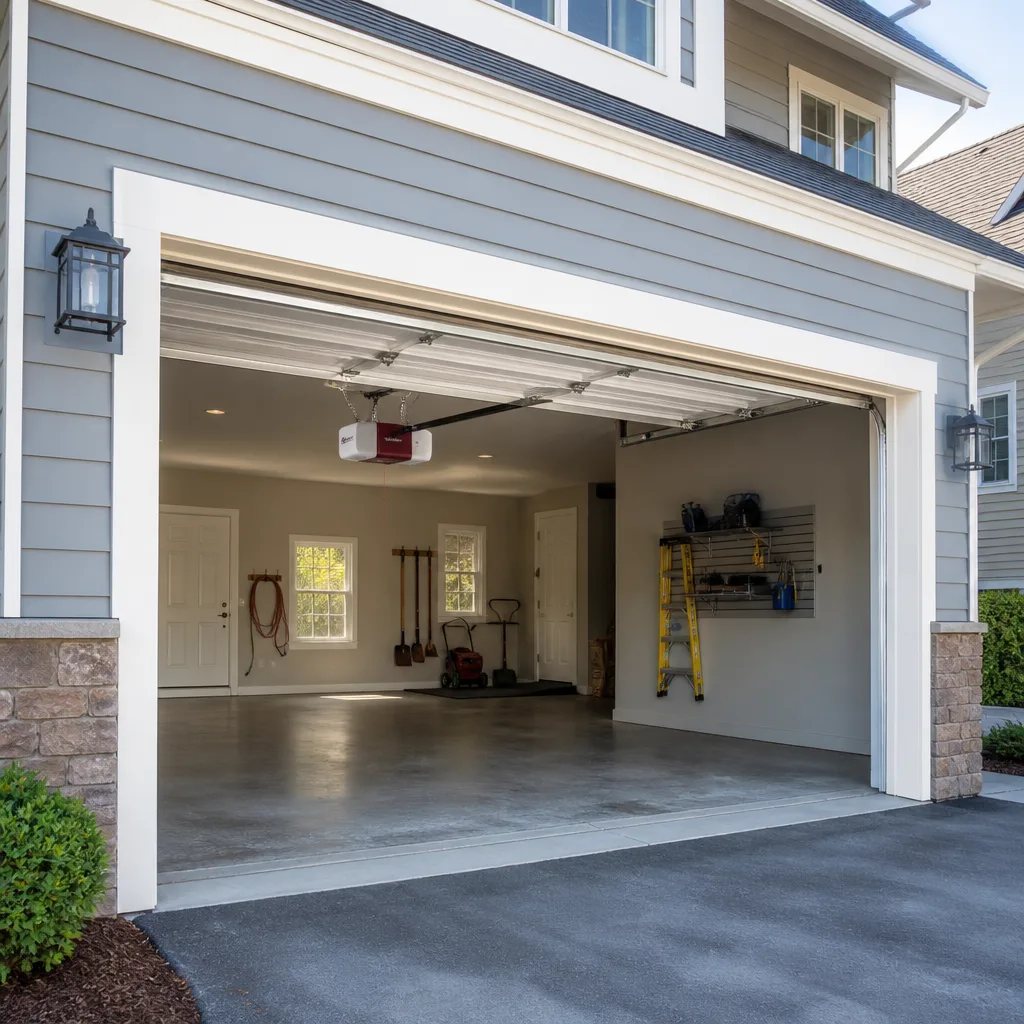 LiftMaster openers
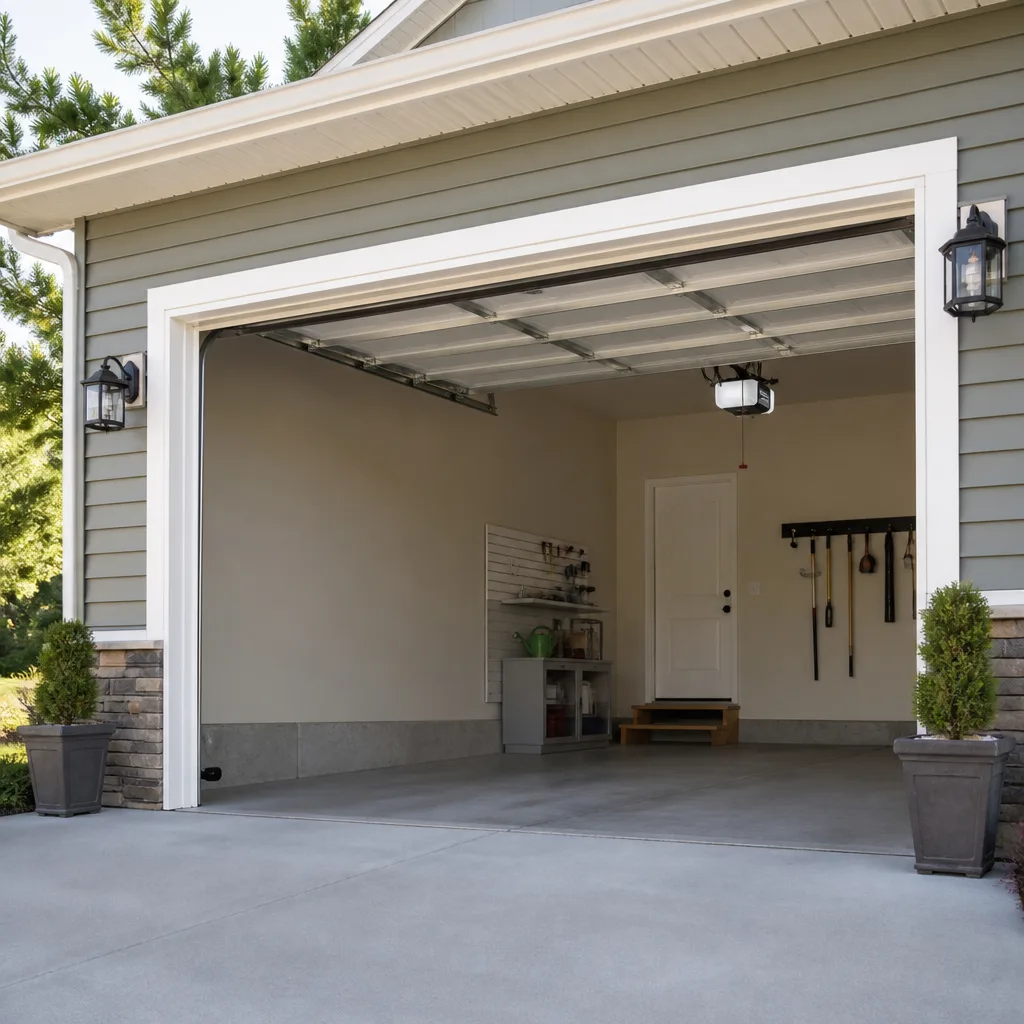 Chamberlain openers
Full 25-point door and opener safety check with every visit - springs, cables, rollers, tracks, and your LiftMaster or Chamberlain opener included
You get a price before we start. It does not change when the truck arrives.
Get your free estimateChoosing the Right Garage Door Brand: A Buyer’s Guide for Miami
The most common brand-related mistake Miami homeowners make isn’t choosing a bad door. It’s choosing a door whose replacement parts aren’t stocked by any local distributor within 50 miles. After a hurricane passes through, that single oversight turns a one-day spring replacement into a two-week wait while a panel ships from a warehouse in Ohio. This guide will walk you through the five brands that hold up in South Florida’s climate, how to verify a door’s Miami-Dade product approval before you buy, and why the dealer relationship matters more than the logo stamped on the panel. For a deeper dive, see The Complete Garage Door Repair Guide for Miami Homeowners.
Quick Answer
The best garage door brand for a Miami home is one with extensive Miami-Dade County product approval listings and a local dealer network that stocks replacement parts. Clopay, Amarr, and Wayne Dalton consistently maintain the broadest HVHZ-compliant catalogs in South Florida, while CHI and Overhead Door offer strong alternatives in specific price bands. Before choosing any brand, verify its product approval number against the Miami-Dade County database and confirm your installer can source parts locally, not from a regional warehouse three states away.
Styles & brands we work with
Table of Contents
- Why Miami-Dade Product Approval Matters More Than Brand Reputation
- How the Major Brands Compare for Miami Homes
- What HVHZ Compliance Actually Means for Your Door
- Why the Dealer Matters More Than the Brand
- The Opener Brand Question: Separate Decision, Separate Criteria
- What a Lifetime Warranty Really Covers in Coastal Salt Air
- Corrosion Resistance: The Finish Question That Determines Lifespan
- Common Mistakes to Avoid
Why Miami-Dade Product Approval Matters More Than Brand Reputation
Miami-Dade County operates the strictest building product approval system in the United States. A garage door that’s sold and installed in Orlando or Tampa without issue may not be legal to install in Miami at all. The county requires every exterior product, including garage doors, to pass wind-load testing, impact testing, and water infiltration testing before it receives a Notice of Acceptance (NOA). If a door doesn’t have an active NOA, your contractor cannot pull a permit for the installation. Period.
This single requirement reshapes the brand conversation entirely. A brand with a stellar national reputation but a thin Miami-Dade approval catalog is functionally irrelevant to a homeowner in Coral Gables, Kendall, or Doral. When we evaluate a door for a Miami installation, the first thing we check isn’t the brand name. It’s the NOA number and the wind-load rating it certifies.
Here’s how to check any door yourself before committing to a purchase:
- Go to the Miami-Dade County Product Control database at miamidade.gov and search “product control search.”
- Enter the manufacturer name or product line exactly as the dealer wrote it on the quote. Brand names alone won’t work in the search – you need the specific product line, like “Clopay Model 4050” or “Amarr Heritage 3000.”
- Verify the NOA is active. Approvals expire and get reissued. An expired NOA is as bad as no NOA.
- Check the wind-load rating against your home’s location. Homes within one mile of the coast in Miami Beach or Key Biscayne require higher ratings than inland homes in West Kendall or Hialeah.
- Confirm the impact rating matches what you’re buying. Some product lines have both impact-rated and non-impact-rated versions. The NOA will specify which version passed testing.
Every major brand has some Miami-Dade approvals. But the breadth varies significantly. Clopay and Amarr have the deepest catalogs, with dozens of product lines approved across multiple wind zones. Wayne Dalton and CHI are close behind. Overhead Door’s approvals skew toward their commercial lines, which means residential options are more limited. If a dealer quotes you a door and can’t provide an NOA number within 24 hours, walk away.
How the Major Brands Compare for Miami Homes
Brand comparisons usually focus on aesthetics and price. For Miami, those are the wrong starting points. The factors that matter here are approval catalog breadth, local parts distribution, and how well the factory finish handles salt air. Here’s a frank look at the five brands we work with most often in the Miami market.
Clopay
Clopay has the deepest Miami-Dade approval catalog of any residential garage door manufacturer. Their premium lines, including the Coachman and Gallery collections, carry HVHZ wind-load ratings that satisfy requirements in every Miami zone, including coastal high-velocity areas. Parts distribution is excellent: multiple distributors in Miami-Dade and Broward stock Clopay panels, springs, and hardware, which means repairs rarely wait on shipping. Their factory finishes, particularly on the Reserve and Bridgeport lines, hold up better than most in salt air, though no finish is immune to corrosion in South Florida without maintenance.
Amarr
Amarr’s strength in Miami is their mid-range catalog. The Heritage and Olympus lines offer a strong balance of hurricane compliance and price, and their Classica collection provides wood-look options at a meaningful discount to true wood doors, which don’t survive well in Miami’s humidity anyway. Amarr’s distribution network covers Miami well through regional dealers, and their finish warranty, while not the longest in the industry, is honored consistently in our experience.
Wayne Dalton
Wayne Dalton’s Model 9700 and 9800 series are common in Miami homes built or renovated in the last 15 years, which means technicians see them constantly. That familiarity matters when something breaks: a technician who diagnoses three Wayne Dalton doors a week fixes yours faster. Their parts distribution is solid through multiple Miami-area suppliers. One consideration: Wayne Dalton’s residential approvals in Miami-Dade are concentrated in their mid-range lines, so buyers looking at entry-level Wayne Dalton models should verify approval coverage before falling in love with a price point.
CHI
CHI Overhead Doors is quietly popular in Miami among homeowners who research heavily before buying. Their overlay carriage house doors and their thermally broken steel lines perform well in South Florida’s heat and humidity. CHI’s Miami-Dade approval catalog is respectable but narrower than Clopay or Amarr, so you’ll have fewer model choices that meet HVHZ requirements. Parts availability is the bigger concern: CHI distribution in Miami is thinner than the other brands mentioned here, which can mean longer waits for specialized hardware after a major storm.
Overhead Door
Overhead Door, the company that invented the overhead garage door in 1921, has strong brand recognition nationally. In Miami, their residential approvals are fewer than their commercial ones, and their dealer network is less dense than it once was. Their doors are well-built, but for a Miami homeowner the question is whether the specific model you want is approved for your wind zone and whether anyone local stocks its springs and rollers. Often the answer to one of those questions is no, which pushes Overhead Door toward the bottom of our Miami recommendation list despite the quality of their product.
What HVHZ Compliance Actually Means for Your Door
HVHZ stands for High Velocity Hurricane Zone. It’s the designation the Florida Building Code applies to Miami-Dade and Broward counties, and it creates a separate, stricter set of requirements than the rest of Florida. A door that meets standard Florida Building Code requirements may not meet HVHZ requirements. This distinction trips up homeowners who buy doors online or through national retailers that don’t specialize in South Florida installations.
An HVHZ-compliant garage door must pass testing that simulates sustained hurricane-force winds and the debris those winds carry. The testing isn’t theoretical: a 2×4 fired at the door at 34 miles per hour must not penetrate the panel. The door must also resist the positive and negative pressure cycles that occur as a hurricane passes, which cyclically push and pull on the door surface. A door that holds up in calm conditions but flexes under repeated pressure loading will fail in a hurricane.
In practice, HVHZ compliance means:
- Reinforced panels with thicker steel or stronger composite materials than non-HVHZ equivalents.
- Heavy-duty tracks and hardware rated for the wind loads the door will carry.
- Impact-rated windows if the door has glass panels, tested to the same standard as impact windows elsewhere on the home.
- An active Miami-Dade NOA that certifies the specific model and size, not just the product family.
When you buy an HVHZ-compliant door in Miami, you’re not just buying storm protection. You’re also buying a door built with heavier materials and tighter manufacturing tolerances, which tends to mean a longer service life even in non-storm conditions. The premium you pay for HVHZ compliance buys durability that pays off over the life of the door.
Why the Dealer Matters More Than the Brand
This is the section where most garage door buying guides go quiet, and it’s the section that matters most in Miami. For broader context on choosing the right door, see The Complete Guide to Garage Door in Miami. A garage door is not a toaster. It’s a heavy mechanical system that will require service, parts, and eventual repair over its 15 to 30 year life. When a spring breaks or a panel gets dented, the brand of the door matters less than whether anyone within driving distance stocks the parts.
In Miami, the dealer relationship is the reliability guarantee. Every major brand sells through dealer networks, and the quality of those networks varies by region. A dealer who carries Clopay in Miami is not the same as a dealer who carries Clopay in Tampa. The Miami dealer’s warehouse, their parts inventory, their technician training, and their response capacity after a storm are all specific to that individual business, not the brand they represent.
Here’s how to evaluate a dealer before you buy, not just their product line:
- Ask where their parts warehouse is. “We can order parts” is not the same as “we stock parts.” In the weeks after a hurricane, every dealer in Miami is ordering parts. The ones with local inventory get repairs done. The ones without make you wait.
- Ask how many technicians they have on staff. A dealer with two technicians is a one-person operation with extra steps. A dealer with a team of technicians can respond faster, especially when every homeowner in your neighborhood calls on the same day.
- Ask which brands their technicians are trained on. Dealer technicians are often factory-trained on one or two brands. A multi-brand technician who works on Wayne Dalton, LiftMaster, and Raynor systems daily diagnoses by system knowledge, not guesswork.
- Ask about their service coverage after installation. The dealer who installs your door should also be the one who services it. A dealer who installs but doesn’t service, or who sub-contracts service to another company, creates a gap in accountability that shows up precisely when you need help.
This is why we’ve structured our own business around multi-brand service. A homeowner whose door was installed by a dealer that went out of business, or whose brand has no local representation, shouldn’t be stuck without options. Craftsman Garage Door Repair home covers the repair needs of homeowners regardless of which brand sits on their house, because the system knowledge transfers across brands.
The Opener Brand Question: Separate Decision, Separate Criteria
Garage door openers are a different product from garage doors, made by different manufacturers, with different failure patterns and different service requirements. Too many buyers assume the opener brand decision should follow the door brand decision. It shouldn’t. The door is a structural product, rated for wind and impact. The opener is an electromechanical product, and the brands that lead in opener reliability are not the same ones that lead in door options.
In Miami, the opener conversation is dominated by three brands: LiftMaster, Chamberlain, and Genie. LiftMaster has the strongest professional installation and service network in South Florida, which is why more Miami-area dealers recommend it than any other opener brand. Chamberlain, which manufactures LiftMaster and shares most of its internals, is the strongest choice for homeowners who buy retail and install themselves. Genie has a loyal following and solid warranty support, though their service network in Miami is thinner than LiftMaster’s.
The factors that matter for Miami opener selection are:
- Heat tolerance. Miami garages routinely exceed 100 degrees in summer, and some openers’ logic boards struggle with sustained heat. LiftMaster and Chamberlain units generally handle heat well; cheaper openers with plastic gear assemblies degrade faster in hot, humid environments.
- Surge protection. Miami’s afternoon thunderstorms produce frequent power surges. An opener plugged directly into the wall without a surge protector will eventually cook its logic board. The opener brand matters less than the surge protector you install alongside it.
- Battery backup. After a hurricane, the power is out and you may need to get your car out of the garage. Openers with integrated battery backup, standard on many LiftMaster models, function through outages. This is not a luxury feature in Miami; it’s a practical necessity.
- Service network. When the opener fails, you don’t want to be the first customer a technician has ever seen with that brand. Garage Door Opener Repair in Miami requires familiarity with the brands homeowners actually own, which is why we train across the major platforms rather than a single line.
What a Lifetime Warranty Really Covers in Coastal Salt Air
“Lifetime warranty” is the most misunderstood phrase in the garage door industry, and nowhere is the misunderstanding more costly than in Miami. The lifetime warranty on most garage doors covers the steel door sections against rust-through. It does not cover rust that hasn’t perforated the panel. It does not cover paint or finish deterioration. It does not cover hardware, springs, rollers, or hinges. And in coastal salt-air environments, most manufacturers add specific exclusions that reduce coverage further.
Here’s what to watch for in the warranty fine print before you buy in Miami:
- Salt-air exclusion clauses. Many manufacturers’ warranties explicitly exclude homes within a certain distance of salt water, typically one to five miles. A home in Coconut Grove or on Key Biscayne may fall inside that exclusion zone. If the dealer can’t show you the exclusion language in writing, assume it exists.
- Rust-through vs. cosmetic rust. The lifetime warranty covers mechanical failure of the steel due to rust, meaning the panel structurally fails. Surface rust, which is what Miami’s salt air actually causes first, is cosmetic and not covered.
- Hardware exclusions. Springs, rollers, cables, and hinges are almost universally excluded from lifetime coverage, and these are the parts that fail first in Miami’s environment. Ask specifically what the hardware warranty covers, and expect 1 to 5 years at most.
- Finish warranty terms. The door’s paint or factory finish carries its own warranty, separate from the rust-through warranty. Pay attention to the finish warranty length and what it requires for maintenance. Some warranties are voided if the door isn’t washed regularly to remove salt deposits.
The best protection against warranty disappointment is buying a door with a factory finish designed for corrosive environments. Some manufacturers offer marine-grade or coastal finish options on their premium lines. These options cost more up front but outlast standard finishes by years in Miami’s conditions. Ask your dealer specifically about coastal finish options, not just about the brand’s general reputation.
Corrosion Resistance: The Finish Question That Determines Lifespan
Miami’s air is not like the rest of Florida’s. The combination of salt spray from the Atlantic, high year-round humidity, and intense UV exposure creates a corrosion environment that ages garage doors faster than nearly anywhere else in the country. A door that lasts 20 years in Jacksonville may last 12 in Miami if the finish isn’t chosen specifically for coastal conditions.
The metal components of a garage door fail in a predictable order in salt air. Springs rust and snap. Rollers seize. Hinges corrode and bind. Tracks develop surface rust that eventually compromises smooth operation. Panels, if the paint is breached by a scratch or chip, start to rust from the edges inward. The brand of the door matters less than the finish and hardware specifications.
What actually helps in a coastal environment:
- Powder-coated tracks and hardware. Look for doors where the tracks, hinges, and brackets are powder-coated rather than painted or left bare galvanized. Powder coating provides a thicker, more durable barrier against salt and humidity.
- Nylon rollers with sealed bearings. Steel rollers rust, and rusted rollers grind against tracks until both fail. Nylon rollers with sealed bearings run quieter, last longer, and don’t rust in Miami’s humidity.
- Corrosion-resistant spring coatings. Standard oil-tempered springs will rust and fail early in Miami. Look for springs with a polymer coating or a corrosion-resistant treatment, and expect to replace springs every 5 to 8 years regardless of brand in coastal conditions.
- Aluminum frames for coastal homes. If your home is within a mile of the ocean, an aluminum-frame door with a marine finish may be a better investment than steel, even though it costs more. Steel will eventually rust in direct salt exposure no matter how good the factory finish is.
When we replace doors in neighborhoods like Cutler Bay, Palmetto Bay, or along the coast in North Beach, we quote hardware and finish upgrades more aggressively than we do for inland homes. The upgrade cost is a fraction of what it costs to replace a prematurely corroded door, and it’s the difference between a door that looks its age and one that looks like new after ten years.
Common Mistakes to Avoid
- Buying a door based on brand reputation without checking Miami-Dade approval. The door may look great in a showroom and have glowing national reviews, but if it doesn’t have an active NOA for your wind zone, it’s not going on your house legally.
- Assuming any Miami garage door company stocks your brand’s parts. Parts distribution varies by brand and by region. A brand that’s easy to service in Atlanta may have no parts distribution in Miami. Ask before you buy.
- Prioritizing price over finish quality for a coastal home. A cheap door with a standard finish will show rust within years in salt air. The money you save on the initial purchase you’ll lose on the replacement.
- Buying the door and the opener from the same brand out of habit. The best door brands and the best opener brands are different companies with different strengths. Evaluate them separately.
- Skimming the warranty instead of reading the exclusions. The lifetime warranty on the panel sounds great until you discover the salt-air exclusion clause applies to your home. Read the fine print before you sign.
- Choosing a dealer based on the brand they carry rather than their service capability. A dealer with one technician and no local parts warehouse is a brand representative, not a service provider. You need the service part of the equation in Miami.
- Delaying door replacement until hurricane season starts. Every Miami homeowner with a failing door has the same thought in May. Dealers book out weeks in advance. Start the process before you need it done urgently.
See the difference
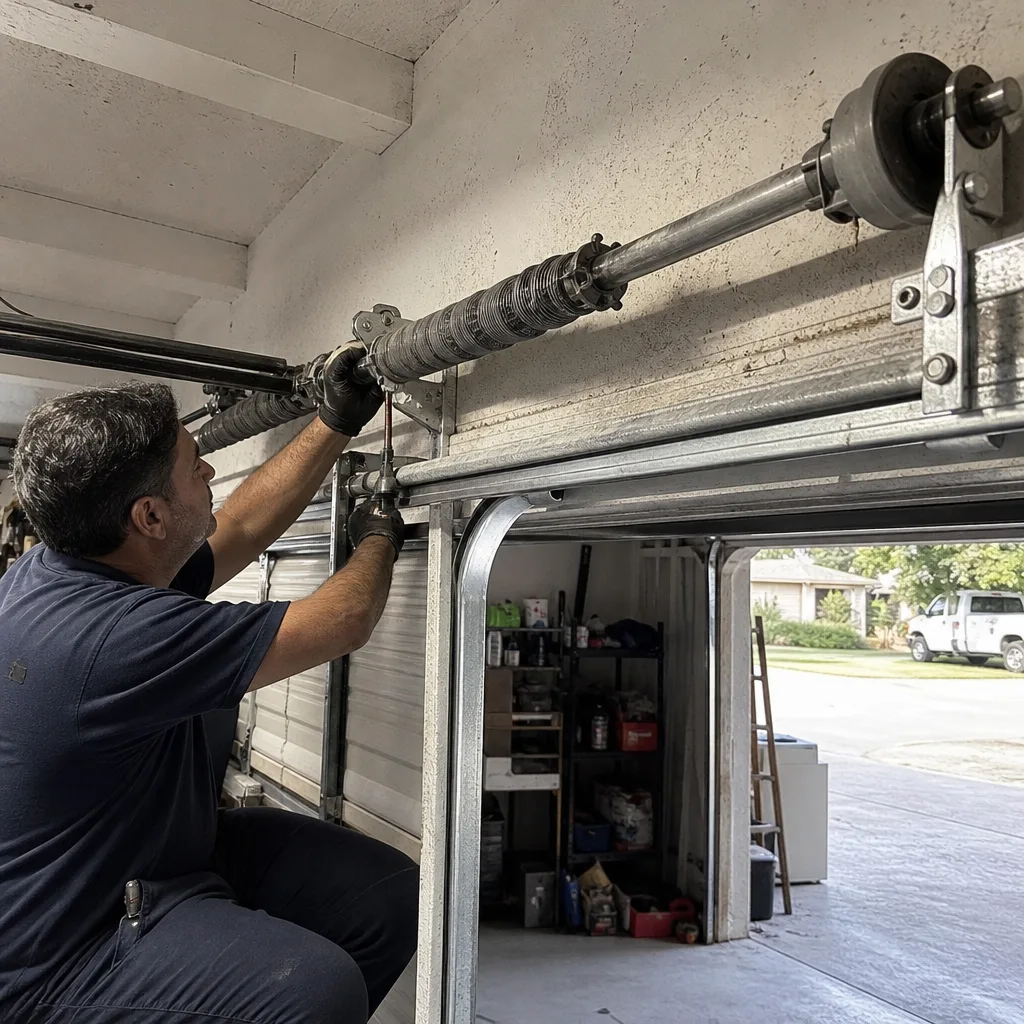 Before
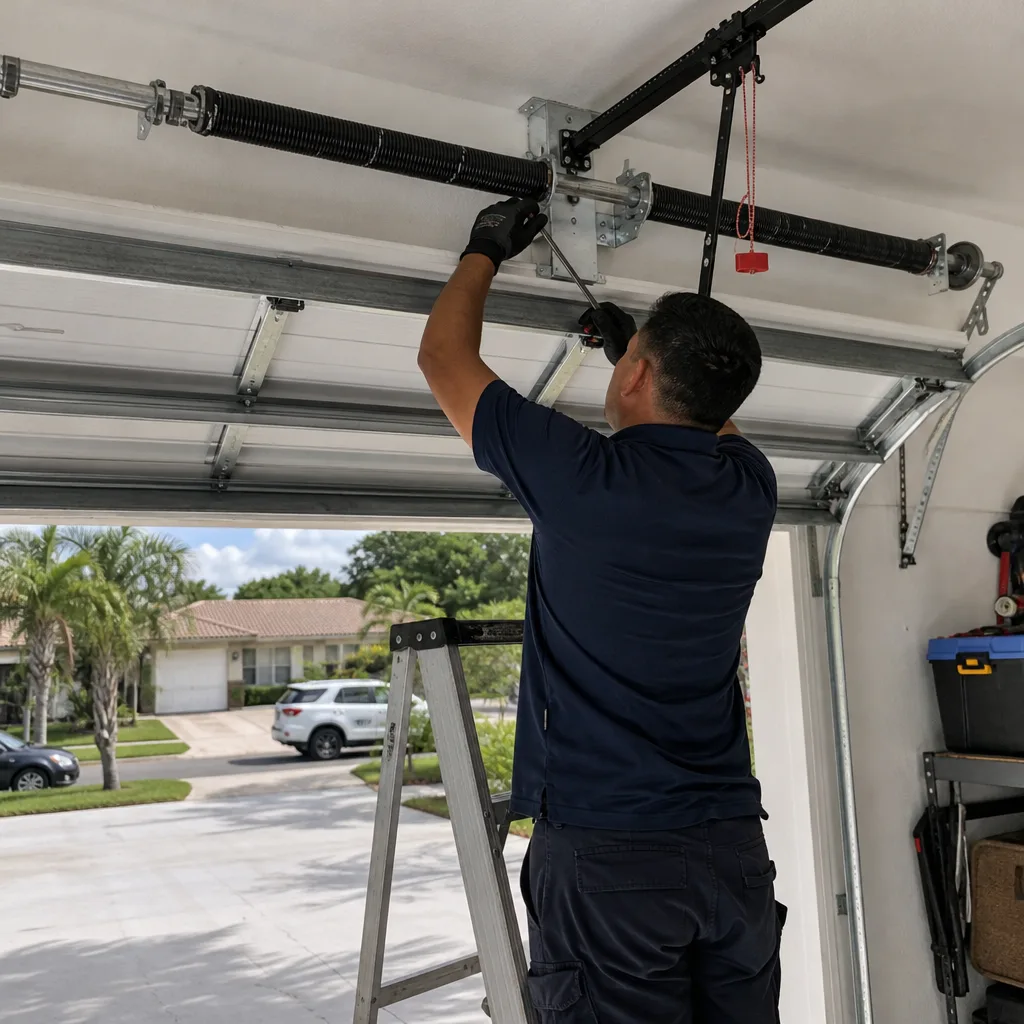 After
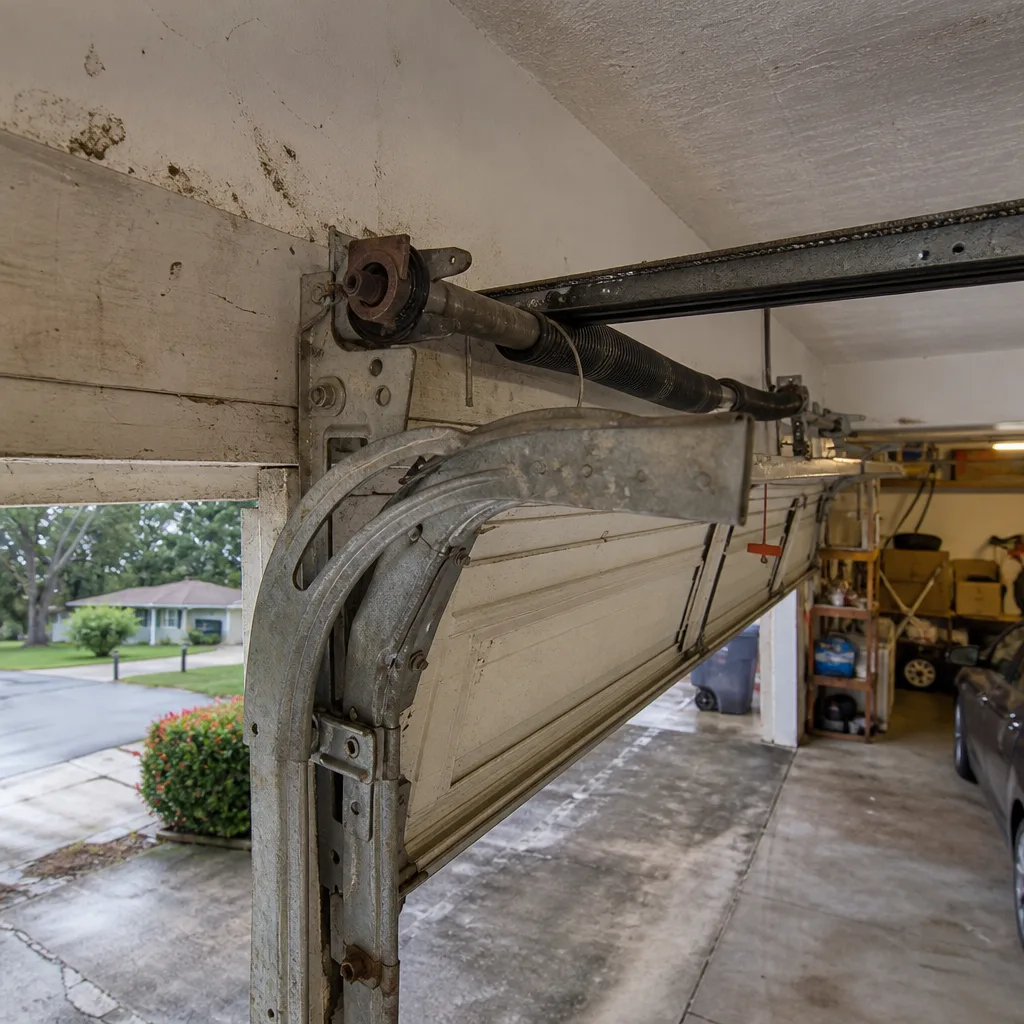 Before
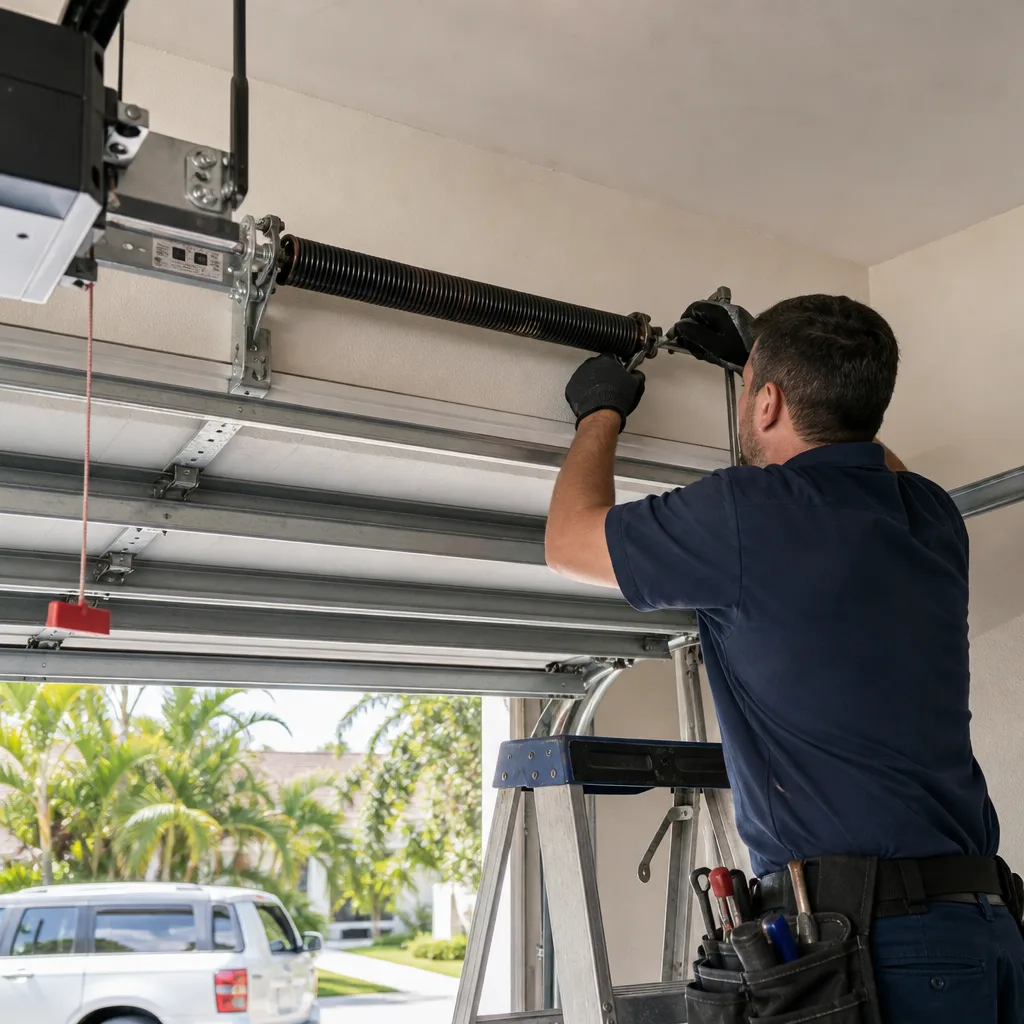 After
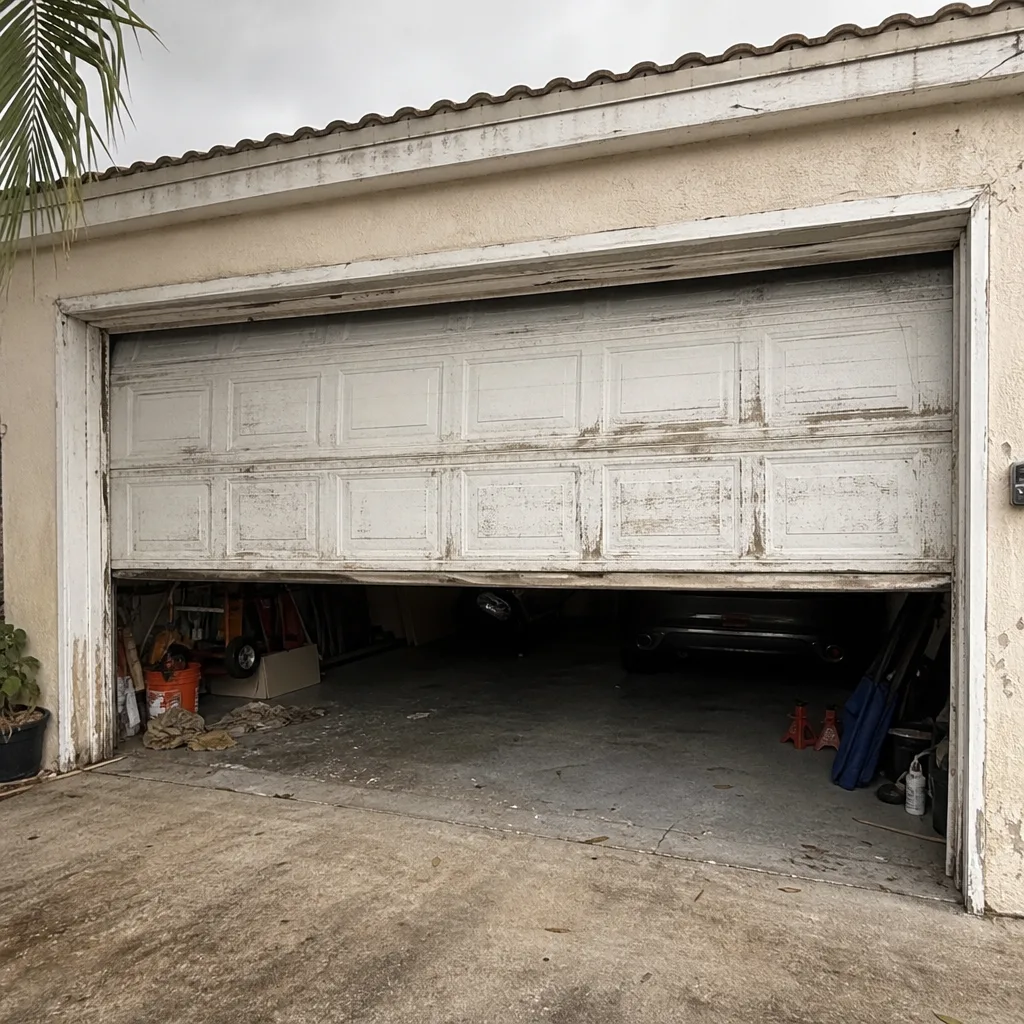 Before
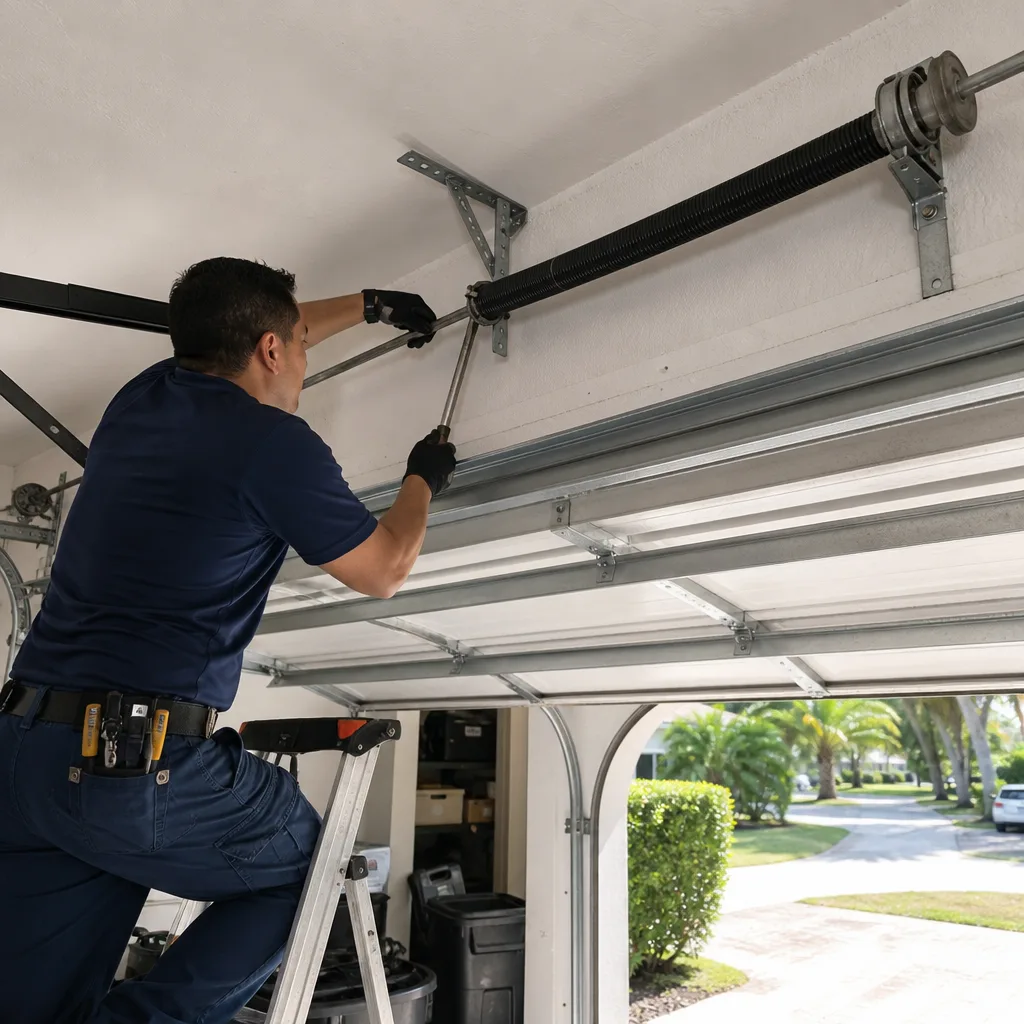 After
When to Call a Professional
If your current garage door is making noise, operating unevenly, or showing visible rust on the springs or hardware, don’t wait until it fails completely. A door that fails during a storm or on a Monday morning when you need to get to work costs more than a door repaired on your schedule. If you’re considering a new door for a Miami home, a professional evaluation will identify whether your current door can be repaired and hardened or whether replacement is the better investment. Garage Door Repair in Miami starts with an honest assessment of what you already have. For full replacements, Garage Door Installation in Miami covers every step from product approval verification to final inspection. We work on the brand you already have, and we’ll never push a replacement when the right fix is a repair. Call (844) 734-6077 for a free estimate on any garage door project in the Miami area.
Frequently Asked Questions
Clopay and Amarr have the broadest Miami-Dade product approval catalogs for hurricane-rated doors in the Miami market. The specific model matters more than the brand, and any door you consider should have an active NOA that matches your home’s wind zone. Call (844) 734-6077 to have a specific model checked against county requirements.
A hurricane-rated, Miami-Dade approved garage door typically costs $1,800 to $4,500 installed in the Miami market, depending on size, material, and finish options. Coastal finishes and impact-rated glass push the price toward the upper end. Get a written quote before committing, and confirm the NOA number is listed on the paperwork.
No. Major brands like Wayne Dalton, Clopay, and Amarr distribute parts through regional distributors, and many Miami-area technicians keep common parts in stock. However, parts availability varies by brand and model, so confirm parts distribution before you buy. A door whose parts aren’t stocked locally will leave you waiting weeks when something breaks.
Yes. LiftMaster openers are consistently reliable in Miami’s heat and humidity, and they have the strongest professional service network in South Florida. Models with battery backup are particularly well-suited to Miami’s storm season. Garage Door Opener Repair in Miami covers LiftMaster, Chamberlain, Genie, and other major opener brands.
A well-maintained garage door within five miles of Miami’s coast typically lasts 10 to 15 years before the salt air takes a visible toll on the finish and hardware. That’s shorter than inland Florida, where 15 to 20 years is more common. Coastal finish options and regular cleaning extend the life of a coastal door.
Warranty coverage for rust depends on the manufacturer and your home’s distance from salt water. Most lifetime warranties only cover rust-through, not surface rust, and many include exclusion clauses for homes within a certain distance of the coast. Review the warranty’s coastal exclusions before you buy, and ask specifically about corrosion-resistant finish options.
The Bottom Line
The right garage door brand for a Miami home is the one with active Miami-Dade product approvals, local parts distribution, and a finish built for salt air. Clopay and Amarr lead the market on approvals and distribution, with Wayne Dalton and CHI offering strong options in specific price ranges. The dealer you choose matters more than the brand stamp on the panel: a knowledgeable technician with local parts access fixes problems faster than a brand name ever will. Before you buy anything, verify the NOA, confirm parts availability, and read the warranty’s fine print. We work on the brand you already have, and we’re glad to walk you through the process of choosing the next one. Explore more guides & resources on our blog.
Written by the team at Craftsman Garage Door Repair, serving Miami since 2012.